
|
Click
Here to return to Isle of the Shamrock Content Page Return to the Previous Chapter |
 (HOME) |
|
IV
A MOUNTAIN CLIMB
In the schools the
approach of the
storm was heralded by a general desire to scud for home, where the
children had
the feeling they would be safer, but the teachers refused permission.
From the
first rumble of thunder to the last the scholars were so frightened
that
studying was out of the question, and they could only tremble and
protect
themselves from impending destruction by continual crossings. When the
storm
passed the praying ceased, and I suppose no more wholesale repenting
was done
until there was another thunderstorm. My purpose to scale one
of the
Killarney mountains had been foiled on the previous day, but now the
clear
sunshine and a fresh breeze encouraged me to try again. I had no very
roseate
fancy for the task — a gentler sort of exercise would have been more to
my
liking; yet I could not help feeling the attraction of those purple
heights
that serrated the whole southern sky-line. I decided I must at least
have a
single experience of the pleasures and possible hardships of an ascent,
and I
chose for my objective, Mt. Mangerton, twenty-eight hundred feet high,
an
altitude slightly exceeded by a rival peak across the lakes, but not
attained
by any other mountain in all Ireland. The route to Mangerton
passed near
the village where I had been during the storm of the day before,
immediately
beyond which, climbing began in earnest. The land upheaved in a big
heathery
slope strewn with boulders and dotted with clumps of furze. I kept to a
faint
path that followed a dry watercourse choked with stones and bordered on
either
side with a narrow ribbon of green turf. In places the trail was so
uncertain
that I would lose it and get off among the hummocks of the bog, where
the
heather and the spongy mosses intermitted with cracks and chasms of
black mud.
Some of these oozy crevasses I leaped, some I went around. At a
distance the
bog looked innocent enough, and I would not have imagined that walking
on it
could have been so toilsome and confusing. It was always a relief to
get back
to the firm track along the stony ravine. A few goats and sheep
were feeding
on the mountain-side, but I saw no human life — not even a shepherd
boy. The
way continued steep and difficult, and the steady upward climb was hot
and
exhausting. It would have been worse still had not gathering clouds
occasionally obscured the sun. I paused often to rest and look back on
the
dwindled world below. There lay the lakes, with their irregular
outlines and
their numerous islets, and there spread the dusky undulations of the
land
through which crept the shining, sinuous streams, and over which
drifted a vast
patch‑work of sunlight and cloud-shadows, evanescent and vague as a
dream. At last the path brought
me to a
small lough lying in a great, high-cuffed pocket of the mountain-top —
a
sombre, lonely little tarn known as the Devil’s Punch Bowl. In spite of
its
name, I ventured to drink from it, and found the water very pure and
cold. But
back in the days when the O’Donoghues were the acknowledged rulers of
the
Killarney country this highland pool was not so innocent. The story is
that a
certain chieftain of the clan was on familiar terms with his Satanic
Majesty,
and in the latter’s honor one time filled the lake with whiskey. Hence
the
name. Besides being icy cold, the water contains no fish, and is said
to be
always in a state of agitation. The English statesman, Fox, swam around
its
twenty-eight acres in 1772, and the natives still talk of the exploit. The Punch Bowl is
twenty-two hundred
feet above the level of the sea, and my goal, the summit of Mangerton,
was
somewhat over half a thousand feet higher. I soon resumed climbing, and
the
view broadened as I went on, until I could see all the great company of
mountains round about. The heavy-based blue peaks rose on every side in
vaporous mystery, a conclave of giants; and it seemed to me there could
hardly
be finer mountains anywhere in the world. Shortly after leaving the
Punch
Bowl, the path entirely disappeared, and only trackless bog lay before
me. But
it was not uneven and broken, like the bogs lower down. Heavily
saturated
surface vegetation overspread it, and the water spirted from beneath my
shoes
at every step, almost as if I had been wading through a shallow pond. I
was
rejoiced to find a momentary escape from this watery waste at the very
summit
of the mountain in the shape of a low cairn of stones. Thence I looked
about me
more particularly. The situation, just there, was not very impressive,
for
Mangerton has a rounded top, and I was in the midst of a wide plain of
weak
grasses, moss, and stunted heather. Save for a few skylarks soaring and
singing, the mountain-top was wholly abandoned and silent, and I had no
desire
to linger. By the time I had
descended to the
Punch Bowl, a shower came drooping across the sober moorlands, and I
crouched
under some projecting rocks and waited for it to pass. Afterward I
sought out
the mountain-path by which I had come up and continued down its now
moist
declivity until I reached the level of the tiny hamlet off beyond the
marsh. It
was after two o’clock, and I had eaten nothing since breakfast, with
the
exception of a few cakes I had carried along in my pocket. On the
chance of
getting a glass of milk in the village, I crossed the marsh and went up
one of
the hamlet’s rough, narrow lanes. The place proved to be well-nigh
deserted,
but the desertion was temporary, not permanent. It was a “Holy Day” —
Corpus
Christi — and nearly every one had gone off to town to attend mass and
to trade
at the shops. Only a few women and old men were left behind; for the
day, as
spent in the town, meant a peculiarly satisfactory combination of
religion,
business, and pleasure, and no one was willingly a stay-at-home. I walked to the farther
side of the
village and back, and saw all of its seven houses. Their surroundings
were very
unkempt and filthy. The stable yards, with their muck and mire, were
right
before the house-doors, and the chickens and other farmyard creatures
wandered
about as they chose, and were nearly as well acquainted with the family
kitchens as were the human inmates. On the hillside about the houses
were many
little fields that looked to be under very thorough tillage, some of
them green
with grass or oats, while others, which had recently been dug over,
were as yet
brown earth. Heavy stone walls crisscrossed the slope in a small-meshed
network, which, nevertheless, failed to absorb all the stones the soil
yielded,
and there were frequent great piles in the midst of the fields. One old man, who closely
resembled a
travelling ragbag, greeted me from a doorway, and went on to say that
he was
eighty-eight years old, and almost blind. He had been a boatman on the
lakes when
he was younger, and at the time Queen Victoria was at Killarney, in
1861, he
had been one of her rowers. This was the single great event of his
life, and he
dwelt on it fondly. The recollection of it seemed to bring to mind his
personal
appearance, and to awake the feeling that his clothes were not all they
should
be, in consideration of the dignity conferred by this long-ago honor.
Nothing
would do but he must go in and tidy up. After a considerable interval
he
reappeared, wearing a black dress-coat much too small for him. Indeed,
it was
not wholly on, but stuck half way; and it so constrained his arms that
he could
do little to better adjust the garment himself, and had to ask me for
assistance. When he finally succeeded in pinching the coat about him,
he
resumed, with added satisfaction, the story of his life. But it soon
came to an
end. Aside from that luminous period of the queen’s visit, when he was
among
those chosen to be her rowers, the only feature of his experience that
had made
deep impress was the increasing blindness of these sombre latter years.
I called again at the
cottage where
I had been during the thunderstorm the day before. The daughter was at
home,
but the old mother had gone to mass early in the morning, and would not
return
until evening. I asked if I could get a glass of milk, and the woman
filled a
teacup from a large earthen bowl that had been on a shelf in a dark
corner.
When she handed it to me she apologized for any smoky taste the milk
might
have, and in all she did and said my hostess was thoroughly considerate
and
kindly. She was no longer young, and she was homely, and worn with rude
labor
almost to ugliness; but she could not have treated me with more genuine
politeness had she been a lady in a mansion. It was she who did most
of the work
about the place, for her brothers were day laborers in the valley, and
her
mother was getting old. “Ah, no,” she said, “mother cannot worruk long
together
now. She likes best to light her pipe and tramp off to Killarney to
mass, or to
sit on a bank in the fields and smoke there, and often she do lay down
her pipe
on the bank and forget it.” I spoke of Queen
Victoria’s rower,
and the woman said: “That was Daniel Hurley. He was a good rower when
he was
young and strang, but he’s nearly dark, now, the poor man!” Life must be very
sober-hued, I
thought, in the forlorn little hamlet; but it has its bright spots,
notwithstanding. One of these is dancing, a favorite recreation
throughout
Ireland. With the approach of summer, in nearly every well-settled
region the
young men join in contributing enough money to put up a dancing
platform at
some central place. There they have their jigs each pleasant evening,
until the
chill days of the late autumn put an end to these open-air festivities.
Then the
scene of them is transferred indoors, and they come at longer
intervals; but in
some convenient farmhouse a dancing party is pretty sure to gather on
Sunday
evening, if on no other evening of the week, the winter through. In
case of a
grand, all-night ball, a half-barrel of porter is provided to keep up
the
enthusiasm, which otherwise would tend to flag in the small hours of
the
morning. A place like the remote
little
mountain village I was visiting had to forego the pleasure of the
summer
dances. The community was too small, and the work of the day too heavy
and
prolonged. Winter brought comparative leisure, and the able-bodied folk
of the
hamlet could not only attend the dances in the home village, but those
that
occurred for miles around. On the mountain, where the houses are all
small,
room was secured for the merrymaking by moving out most of the
furniture. The
music, on ordinary occasions, was supplied by some of the local youths
who
played the concertina, but in a really tony affair a fiddler, or
perhaps a
piper, was hired. There was a curious lack
of
animation in the woman’s voice and manner as she told me about these
rural
balls. I suppose for her the days of sweethearts were past, and that
she no
longer joined in the dancing, but sat among the old folks, looking on. When I prepared to go on
down the
mountain, I offered a piece of silver for the milk I had drank. That
was a
mistake. It hurt the woman’s feelings. The welcome accorded me had not
been for
money, but was an unselfish expression of hospitality. What was true in
this
upland home was true of the Kerry peasantry generally — they like to
have a
stranger come into their houses and sit and chat, and perhaps have a
bit to eat
and drink with them. To offer pay is to destroy the comradeship which
they
value above profit. This open-hearted friendliness was a surprise to
me, and
wherever I met with it, there was awakened not only respect and warm
regard for
my entertainers, but, to some degree, for all Ireland. In recalling what I saw
of the
tillage about these mountain huts at Killarney, I am impressed with the
predominance of the potato plots; and it was the same in the poor
little
bogland villages everywhere I travelled. As a matter of history,
potatoes have
been the mainstay of Ireland for more than two hundred years. The
question is
still disputed whether they have proved a boon, or a sustainer of
poverty and
wretchedness. A very limited portion of land, a few days of labor, and
a small
amount of manure will create a stock on which a family can exist for
twelve
months. But the dependence on a single crop is disastrous when that
crop fails,
as it naturally must, from time to time, so that on the whole it is to
be
regretted that the potato has won such an exclusive place for itself. The potato was first made
known to
Ireland by Sir Walter Raleigh, who owned an estate on the south coast.
It won
its way slowly, and both in Britain and on the continent was for some
time
cultivated only in gardens, and even there as a curiosity rather than
as an
article of food. Presently it was imagined that it might be used with
advantage
for feeding “swine or other cattle,” and by and by that it might be
eaten by
poor people, and thus serve to prevent famine when the grain crops
failed.
Ireland led all European countries in the adoption of the potato by
many years;
and it was from there it was introduced into Lancashire, about the end
of the
seventeenth century, whence it spread over England. Erin’s most distressing
experience
with this staple was in the famine years of 1846 and 1847. I am
acquainted with
no more graphic description of that period — the darkest through which
the
island has passed in centuries — than is contained in the pages of
“Realities
of Irish Life,” by W. Steuart Trench. His story is well worth
retelling. Mr.
Trench resided at Cardtown, in Queen’s County, where he had become much
interested in reclaiming an extensive tract of mountain land, chiefly
of rough
pasture covered with heather. He kept no less than two hundred laborers
constantly employed in this enterprise at good wages, and the upland
glen where
his mountain property was located, with a clear trout brook flowing
through it
to enhance its attraction, had come to be known as “The Happy Valley.” He accomplished the
reclaiming
mostly by means of the potato, the only green crop which would flourish
on such
ground. Guano had at that time recently been brought into use as a
manure, and
he found it was particularly suited to the potato. This and lime he
applied
liberally. The land was ploughed into “lazy beds” — ridges about five
feet in
width, alternating with furrows. The potatoes were planted on the
ridges by
merely sticking the spade into the rough earth and dropping in the seed
back of
the tool, where it remained two or three inches beneath the surface,
when the
spade was withdrawn. The potatoes thus treated developed to perfection,
and the
harvest well repaid all labor and expense. Meanwhile the heather rotted
under
the influence of the lime, and was transformed with other abundant
vegetable
matter which the soil contained into a valuable fertilizer. Finally, in
digging
the crop, the ground was thoroughly turned and stirred. As it was now
both
mellow and greatly enriched, it was in excellent order for sowing grass
or
grain, and was permanently worth twenty times its former value. The expense of reclamation was practically defrayed by the sale of the first year’s crop alone; and encouraged by success attained in previous seasons, Mr. Trench, in 1846, planted to potatoes more than one hundred and fifty acres. Everything went well during the early summer, and in July the extent and luxuriance of his upland potato fields were the wonder of every one who saw them. He felt certain that the harvest would bring him at least £3000. But on August 1st he was startled by the report that all the potatoes of the district were blighted. He immediately hurried up to the Happy Valley, and was relieved to find his crop as flourishing as ever, in full blossom, the stalks matted across each other with richness, and promising a splendid increase. Things were quite otherwise in the lowlands, whither he rode on his return. The leaves of the potatoes, in many instances, were withered, and a strange stench, such as he had never smelled before, filled the atmosphere about every blighted field. He learned that the odor was generally the first indication of the disease, and the withered leaf followed in a day or two afterward; lastly the tubers themselves were affected and rapidly blackened and melted away. Much alarm prevailed in the country, and those who, like Mr. Trench, had staked a large amount of capital on the crop became extremely uneasy, while the peasantry looked on, helplessly dismayed, at the total disappearance of the crop of all crops on which they depended for food. 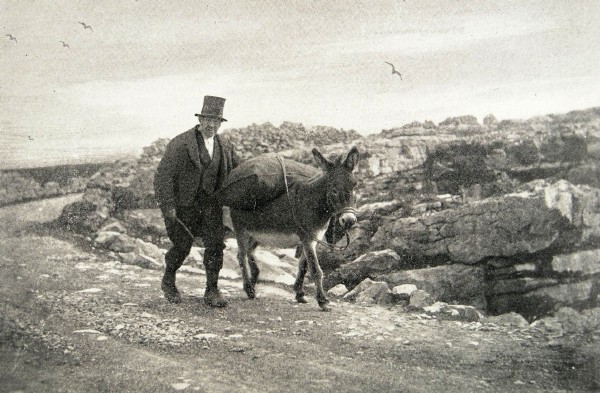 GOING TO MARKET Mr. Trench now went
regularly each
day to his mountain farm, and saw it steadily advance toward a healthy
and
abundant maturity until August 6th. On that day as he rode up the
valley he was
met by the stench. This increased as he kept on, until he could hardly
bear the
fearful smell. The fields still looked as promising as ever, but he
recognized
that their doom was sealed. As soon as the necessary arrangements could
be
made, he attempted to save himself from total loss by converting into
starch as
many of the potatoes as could be rescued from the impending decay, but
the sum
realized was more than counterbalanced by the expense. Desolation, misery, and
starvation
now rapidly affected the poorer classes throughout Ireland. In the
comparatively fertile and prosperous midland counties there were few
deaths
from actual starvation; yet many succumbed to impure and insufficient
diet,
while fever, dysentery, and the crowding in the workhouse carried off
thousands. It took time for would-be
helpers to
realize the extent and seriousness of the catastrophe, but public
relief works
were soon set on foot by the government, soup kitchens were
established, free
trade was partially adopted, Indian meal poured into the country, and
money was
supplied without limit; yet still the people died. The trouble seemed
to be
that the sufferers had neither the strength nor energy to seek the aid
offered
even when it was near at hand. Not far from two hundred thousand
perished in
all, and as a result of the distress vast numbers emigrated. A considerable period
elapsed before
the country recovered from the disaster. This was illustrated by Mr.
Trench’s
experience in Kerry, where he went toward the end of 1849, by request
of Lord
Lansdowne, one of the great proprietors of the county. The misery of
the famine
years had been especially marked at Kenmare. His lordship had there an
estate
of sixty thousand acres, lying in an extensive valley about thirty
miles long
and sixteen broad. Little grain was grown in the district, and the
portions of
land reclaimed from the rocky mountains were so small that they were
barely
sufficient to grow potatoes and turnips enough for the sustenance of
the people
and their cattle through the winter. No restraint had been put on the
subdivision of holdings, and boys and girls not yet out of their teens
married
unchecked, without thinking it necessary to provide aught for their
future
beyond a shed to shelter them and a bit of land for a potato patch.
Innumerable
squatters had settled unquestioned in huts on the mountain sides and in
the
remote glens; and when supplies ran short, as they did in the spring or
by the
beginning of summer nearly every year, these squatters nailed up the
doors of
their cabins, took all their children along with them, and started out
on a
migratory and piratical expedition over the counties of Kerry and Cork,
trusting to their adroitness and good luck in begging to keep the
family alive
until the potato crop again matured. When the rot attacked this staple,
and it
melted completely away before the eyes of the people, Kenmare was
paralyzed.
All were reduced to nearly equal poverty, and begging was out of the
question.
Thus it happened that the wretched dwellers of the upland huts were
reduced to
dire straits, and great numbers of them succumbed to their fate almost
without
a struggle. By the time Mr. Trench
came to
Kenmare the famine was about over, but its after effects were still
formidable,
and the people were dying nearly as fast as ever of fever, scurvy, and
other
complaints within the walls of the workhouse. The workhouse itself was
not
large enough to accommodate the unfortunates who flocked to it, and
large
auxiliary sheds had been erected to shelter the overflow. About ten
thousand persons
in the vicinity were receiving relief. Mr. Trench first gave his
attention to
reducing the crowd in the poorhouse, and to this end promised the
inmates
outside work near by and reasonable wages. His intention was to put
them at
draining, subsoiling, removing rocks and stones, and like labor. At
once three
hundred gaunt, half-famished men, and nearly as many women and boys,
presented
themselves, expecting him not only to provide employment, but tools.
They were
too weak to be very effective, and accomplished not much more than
one-fourth
of what they would have under ordinary conditions. Now that they had work, they could no longer lodge in the poorhouse, and their scattered home huts were in most instances so far distant that walking to them for housing after the day’s labor was out of the question. As a result, every cabin in the town was packed nightly with these unhappy work-people, and they slept by threes and fours together, wherever they could get a pallet of straw to lie on. They lived from hand to mouth, and on a wet day, when they could not labor, nearly one-half of them were obliged to return for the time being to the poorhouse, and the sudden influx of such a body of famished newcomers created great confusion. Mr. Trench saw plainly that this could not go on, and with Lord Lansdowne’s approval and financial support he put into practice another scheme. He offered free emigration to every man, woman, and child now in the poorhouse who was chargeable to his lordship’s estate. This was not wholly philanthropy; for though it was believed that the paupers would gain thereby, it was also argued that it was cheaper to pay their passage abroad than to continue to support them at home. They were allowed to select what port in America they pleased, whether Boston, New York, New Orleans, or Quebec. 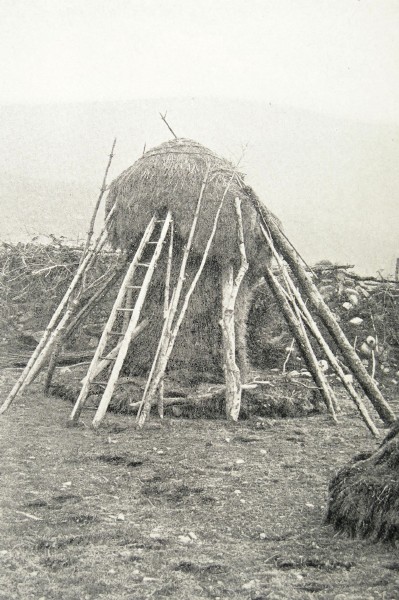 A DWINDLING HAYSTACK The announcement was at first scarcely credited. To the dwellers of the workhouse it was considered too good news to be true. But when it began to be believed and appreciated, there was an instant rush to get away. A selection was made, and two hundred each week were conducted to Cork, under close surveillance, to keep them from scattering, and were soon safely on board the emigrant ship. They made a motley company; but notwithstanding the distress of their circumstances, they were in the most uproarious spirits. There was no crying or lamentation. All was delight at having escaped the deadly workhouse. The majority of them spoke only the Irish language, and these wild batches direct from the stricken boglands of the old country must have presented a strange spectacle when they landed on the wharves of America; yet Mr. Trench affirms that nearly all, even to the widows and children, found employment immediately after arriving, and adds that they have acquitted themselves, in their adopted land, most creditably. It was many months before the desire for free emigration was satisfied, and the poorhouse filled as fast as it was emptied. In all, forty-six hundred persons were assisted across the sea from this single estate, and very greatly to its benefit. It was no longer over-populated, small holdings were combined, and the tenants were enabled to win much better livings than had been possible before. 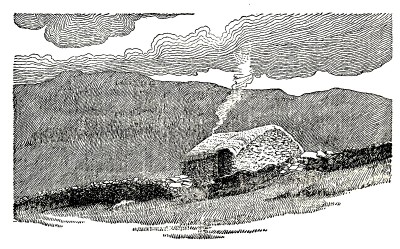 |
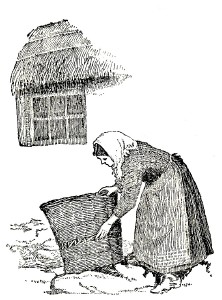 THE weather
in the early hours of
the following morning was unusually fine. The blue of the sky was
perfectly
clear and placid, and yesterday’s storm was only a reminiscence. It had
swept
over Killarney town with great severity, and hailstones had fallen
which the
natives said were “as big as small p’taties.” But it was the thunder
rather
than the hailstones that had especially aroused the anxiety of the
townfolk,
and their alarm was of much the same type as that I had witnessed in
the hut on
the mountain. They did more praying in the short duration of this one
storm
than they would have done in six months of fair weather, and with every
crash
from the heavens the sins of the whole community were repented of
afresh.
THE weather
in the early hours of
the following morning was unusually fine. The blue of the sky was
perfectly
clear and placid, and yesterday’s storm was only a reminiscence. It had
swept
over Killarney town with great severity, and hailstones had fallen
which the
natives said were “as big as small p’taties.” But it was the thunder
rather
than the hailstones that had especially aroused the anxiety of the
townfolk,
and their alarm was of much the same type as that I had witnessed in
the hut on
the mountain. They did more praying in the short duration of this one
storm
than they would have done in six months of fair weather, and with every
crash
from the heavens the sins of the whole community were repented of
afresh.  Click the book image to turn
to the next Chapter.
Click the book image to turn
to the next Chapter.