
Web
and Book design,
Copyright, Kellscraft Studio 1999-2007 (Return to Web Text-ures) |
 (HOME)
|
|
THE INVISIBLE
PRINCE  HERE was a King
and Queen who were doatingly fond of their only son, notwithstanding he
was
equally deformed in mind and person. The King was quite sensible of the
evil
disposition of his son, but the Queen, in her excessive fondness, saw
no fault
whatever in her dear Furibon, so he was named. The surest way to win
her
favour, was to praise Furibon for charms he did not possess. When he
came to be
of age to have a governor, the King made choice of a prince who had an
ancient
right to the crown, but was not able to support it, owing to the bad
state of
his affairs: he possessed a son of a most amiable disposition and
agreeable
manners, united to a very handsome person; this youth’s name was
Leander. He
was almost always in Furibon’s company, but that only rendered the
deformed
prince more hideous. ‘You are very happy,’ said he, looking on him with
a
malicious eye, ‘every body is lavish in their praises of you; but not
one of
them has a good word for me.’ — ‘Sir,’ replied Leander modestly, ‘the
respect
they have for you restrains them from being familiar.’ — ‘They do very
well,’
said Furibon, ‘for otherwise I should knock their heads and the wall
together,
to teach them their duty.’ HERE was a King
and Queen who were doatingly fond of their only son, notwithstanding he
was
equally deformed in mind and person. The King was quite sensible of the
evil
disposition of his son, but the Queen, in her excessive fondness, saw
no fault
whatever in her dear Furibon, so he was named. The surest way to win
her
favour, was to praise Furibon for charms he did not possess. When he
came to be
of age to have a governor, the King made choice of a prince who had an
ancient
right to the crown, but was not able to support it, owing to the bad
state of
his affairs: he possessed a son of a most amiable disposition and
agreeable
manners, united to a very handsome person; this youth’s name was
Leander. He
was almost always in Furibon’s company, but that only rendered the
deformed
prince more hideous. ‘You are very happy,’ said he, looking on him with
a
malicious eye, ‘every body is lavish in their praises of you; but not
one of
them has a good word for me.’ — ‘Sir,’ replied Leander modestly, ‘the
respect
they have for you restrains them from being familiar.’ — ‘They do very
well,’
said Furibon, ‘for otherwise I should knock their heads and the wall
together,
to teach them their duty.’ One day,
when a
certain ambassador arrived from a remote country, Furibon, accompanied
by
Leander, stood in a gallery to see them pass by; but when the
ambassadors
beheld Leander, they approached him with profound reverence, testifying
their
admiration by signs. Afterwards observing Furibon, they took him to be
his
dwarf; and seizing him by the arm, they turned him about as it were to
view him
round, notwithstanding all he could do to prevent them. Leander was
vexed
extremely; in vain he told them it was the king’s son, for they
understood him
not; and the interpreter was gone to wait their appearance before the
king.
Leander finding he could not make them understand him, redoubled his
respects
to Furibon. But the ambassadors as well as those of their train,
believing he
was in jest, began to laugh at Furibon’s angry impatience, and
endeavoured to
fillip him upon the nose, as they used to serve monkeys in their own
country.
Furibon at last drew his sword, which was not much longer than a lady’s
bodkin;
and might have done some mischief, had not the king appeared to meet
the
ambassadors. He was greatly surprised to behold his son’s behaviour,
and begged
their excuse, if any incivility had been offered them. They replied,
the matter
was of no consequence; for they perceived the little ugly dwarf was of
a bad
disposition. The king was greatly chagrined to find that his son’s
ill-favoured
mien, and his extravagances, had made his rank be so widely mistaken.
Leander
made no
reply, but retired sad and pensive to his own home, where he spent the
night in
pondering what was best for him to do; for there was no likelihood he
should be
able to defend himself against the king’s son; and therefore he at
length
concluded to see the world. Being ready to depart, he recollected his
snake,
and calling for some milk and fruits, carried them to the poor
creature,
designing to take his leave and dismiss it; but, on opening the door,
he
perceived an extraordinary lustre in one corner of the room; and
casting his
eye on the place, he was surprised to see a lady, whose noble and
majestic air
made him immediately conclude she was a princess of royal birth. Her
habit was
of purple satin, embroidered with pearls and diamonds; and advancing
towards
him, with a gracious smile, ‘Young prince,’ said she, ‘you are no
longer to
seek here for the snake which you brought thither; it is not here, but
you find
me in its place, to requite your generosity; but to speak more
intelligently,
know that I am the fairy Gentilla, famous for the feats of mirth and
dexterity
which I can perform. We live a hundred years in flourishing youth,
without
diseases, without trouble or pain; and this term being expired, we
become
snakes for eight days: and this is the only time which may prove fatal
to us;
for then it is not in our power to prevent any misfortune that may
befall us:
and if we happen to be killed, we never revive again. But these eight
days
being expired, we resume our usual form, and recover our beauty, our
power, and
our riches. Now you know how much I am obliged to your goodness, and it
is but
just that I should repay my debt of gratitude: think how I can serve
you, and
depend upon me.’ The young
prince,
who had never conversed with a fairy till now, was so surprised that it
was a
long time before he could speak. But at length making her a profound
reverence,
‘Madam,’ said he, ‘since I have had the honour to serve you, I know not
any
other happiness that I can wish for.’ — ‘I should be sorry,’ replied
she, ‘not
to be of service to you in something; consider, it is in my power to
make you a
great king, prolong your life, make you more amiable, give you mines of
diamonds, and houses full of gold; I can make you an excellent orator,
poet,
musician, and painter; I can make you beloved by the ladies, and
increase your
wit; I can make you a spirit of the air, the water, or the earth.’ Here
Leander
interrupted her, ‘Permit me, madam,’ said he, ‘to ask you what benefit
it would
be to me to be invisible or a spirit?’ — ‘A thousand useful and
delightful
things might be done by it,’ replied the fairy; ‘you would be invisible
when
you pleased, and might in an instant traverse the whole earth; you
would be
able to fly without wings, and descend into the abysses of the earth
without
dying, and walk at the bottom of the sea without being drowned, nor
doors, nor
windows, though fast shut and locked, could hinder you from entering
any of the
most secret retirements: and whenever you had a mind you might resume
your
natural form.’ — ‘Oh, madam!’ cried Leander, ‘then let me be a spirit.
I am
going to travel, and prefer it above all those other advantages you
have so
generously offered me.’ Gentilla thereupon stroking his visage three
times, ‘Be
a spirit,’ said she; and then embracing him, she gave him a little red
cap with
a plume of feathers: ‘When you put on this cap, you shall be invisible;
and
when you take it off, you shall again become visible.’ Leander,
overjoyed, put
his little red cap upon his head, and wished himself in the forest,
that he
might gather some wild roses which he had observed there; his body
immediately
became as light as thought; he flew through the window like a bird; but
he was
not without fear when he was soaring in the air and flying over any
river, lest
he should fall into it, and the power of the fairy not be able to save
him. But
he arrived in safety at the rose-bushes, plucked three roses, and
returned
immediately to the chamber where the fairy still was, and presented his
roses
to her, overjoyed that his first experiment had succeeded so well. But
the
fairy bid him keep the roses, for that one of them would supply him
with money
whenever he wanted it; that if he put the other into his mistress’s
bosom, he
would know whether she was faithful or not; and that the third would
prevent
his being sick. Then, without staying to receive his thanks, she wished
him
success in his travels, and disappeared.
Leander,
satisfied
with this revenge, returned to his servants, who waited for him, and,
giving
them money, sent them back to his castle, that none might know the
secret of
his red cap and roses. As yet he had not determined whither to go;
however, he
mounted his fine horse Gris-de-line, and laying the reins upon his
neck, let
him take his own road; at length he arrived in a forest, where he
stopped to
shelter himself from the extremity of the heat. He had not been above a
minute
there before he heard a lamentable noise of sighing and sobbing; and
looking
about him, he beheld a man, that ran, made several stops, then ran
again,
sometimes crying, sometimes silent, then tearing his hair, then
thumping his
breast, as if he would have beaten the breath out of his body; so that
he took
him for some unfortunate madman. He seemed to be both handsome and
young: his
garments had been magnificent, but he had torn them all to tatters. The
prince,
moved with compassion, made towards him, and mildly accosting him,
‘Sir,’ said
he, ‘your condition appears so bad and deplorable, that I
cannot forbear to ask
the cause of your sorrow, assuring you of every assistance that lies in
my
power.’ — ‘Oh, Sir,’ answered
the young man, ‘nothing can remedy my miseries;
this day my dear mistress is to be sacrificed to an old jealous
barbarian, who
has a great estate, but who will make her the most miserable person in
the
world.’ — ‘Does she love you
then?’ said Leander. ‘I flatter myself
so,’
answered the young man. ‘Where is she?’ continued
Leander. ‘In a castle at the
end of this forest,’ answered the lover. ‘Very
well,’ said Leander; ‘stay you
here till I come again, and in a little while I will bring you good
news.’ He
then put on his little red cap, and wished himself in the castle. He
had hardly
got thither before he heard the pleasing sound of soft music; but when
he
arrived, the whole castle resounded with all sorts of music. He entered
into a
great room, where the friends and kindred of the old man and young lady
were
assembled. Nothing could be more amiable than she was; but the paleness
of her
complexion, the melancholy that appeared in her countenance, and the
tears that
now and then dropped, as it were by stealth, from her eyes, discovered
the
trouble of her mind. Leander
now became
invisible, and placed himself in a corner of the room, that he might
discover
who the persons were; and he soon perceived the father and mother of
the maid,
by their private chiding her for not appearing with the sprightliness
of a
bride; which, after they had done, they returned to their seats.
Leander
placing himself behind the mother’s chair, and laying his lips to her
ear,
‘Assure yourself,’ said he, ‘that if you compel your daughter to give
her
consent to marry that old dotard, before eight days are expired, you
shall
certainly be punished with death.’ The woman, frightened to hear such a
terrible sentence pronounced upon her, and yet not know from whence it
came,
gave a loud shriek, and fell upon the floor. Her husband asked her what
she
ailed? She cried she was a dead woman if the marriage of her daughter
went
forward; and therefore she would not yield to it for all the world. Her
husband
laughed at her, and called her a fool. But the invisible Leander
accosting the
man, ‘you old incredulous fool,’ said he, ‘believe your wife, or it
will be the
worse for you: break off this match, and bestow her on the person she
loves.’
These words produced a wonderful effect; and when the old lover
complained,
Leander trod hard upon his gouty toes, and rung such an alarm in his
ears, that
not being able any longer to hear himself speak, away he limped,
murmuring like
a hackney coachman that would have more than his hire. Now the
distracted lover
was sought for, when he the least expected it, and was brought to the
castle,
where Leander with patience waited for his coming. The lover and his
mistress
were ready to die for joy, and the entertainment prepared for the
nuptials of
the old man served for those of these happy lovers. Leander, assuming
his own
shape, appeared at the hall door, as a stranger drawn thither by the
report of
this extraordinary wedding. From
hence he
travelled on, and came to a great city, where, upon his arrival, he
understood
there was a great and solemn procession, in order to the shutting up a
young
virgin, against her will, among the vestal nuns. The prince was touched
with
compassion; and thinking the best use he could make of his cap, was to
redress
public wrongs, and relieve the oppressed, he flew to the temple, where
he saw
the young virgin crowned with flowers, clad in white, and with her
dishevelled
hair flowing about her shoulders. Two of her brothers led her by each
hand, and
her mother followed her with a great crowd of men and women. Leander
being
invisible, cried out, ‘Stop, stop, wicked brethren; stop,
rash and inconsiderate
mother; if you proceed any farther, you shall be squeezed to death like
so many
frogs.’ They looked about, but could not conceive from whence
these terrible
menaces came. The brothers said it was only their sister’s
sweetheart, who had
hid himself in some hole. At which Leander, in wrath, took a long
cudgel, and
they had no reason to say the blows were not well laid on. The
multitude fled,
the vestals ran away, and Leander was left alone with the victim;
immediately
he pulled off his red cap, and asked the virgin wherein he might serve
her. She
answered him, with a confidence rarely to be expected from a virgin of
her age,
that there was a certain gentleman whom she would be glad to marry, but
that he
wanted an estate. Leander then shook his rose so long, that he supplied
them
with ten millions; after which they married and lived happily together.
But his
last adventure was the most agreeable: for entering into a wide forest,
he
heard the lamentable cries of a young person, as if some violence was
offered to
her. Looking about him every way, at length he spied four men well
armed, that
were carrying away by force a young lady, thirteen or fourteen years of
age:
upon which, making up to them as fast as he could, ‘What harm
has that virgin
done,’ said he, ‘that you do her this
violence?’ — ‘Ha, ha, my little
master,’
cried he who seemed to be the ring-leader of the rest; ‘who
made you an
examiner?’ — ‘I command ye,’
said Leander, to let her alone, and go about your
business.’ — ‘Oh, yes, to be
sure,’ cried they, laughing; whereupon the prince
alighted, put on his red cap, not thinking it otherwise prudent to
attack four,
who seemed strong enough to fight a dozen. They must have had good
eyes, who
could have seen him when his cap was on. One of them stayed to take
care of the
young lady, while the three others went after Gris-de-line, who gave
them a
good deal of exercise. The robbers thinking he was fled, ‘It
is not worth while
to pursue him,’ said they, ‘only let us catch his
horse.’ The young lady
continued her cries and complaints: ‘Oh my dear
princess,’ said she, ‘how happy
was I in your palace! How is it possible for me to live without your
company?
Did you but know my sad misfortune, you would send your Amazons to
rescue poor
Abricotina.’ Leander having listened to what she said,
without delay seized the
ruffian that held her, and bound him fast to a tree before he had time
or
strength to defend himself. Leander having diverted himself awhile with
his
cries, he then went to the second, and taking him by both arms, bound
him in
the same manner to another tree. In the meantime Abricotina made the
best of
her good fortune, and betook herself to her heels, not knowing which
way she
went. But Leander missing her, called out to his Gris-de-line three
times; who
finding a force upon him to obey his master’s call, by two
kicks with his hoof
rid himself of the two ruffians who had pursued him; one of them had
his head
broken, and the other three of his ribs. And now Leander only wanted to
overtake Abricotina; for he had thought her so handsome, that he wished
to see
her again, and presently overtook her. But he found her so weary, that
she was
forced to lean against a tree, not being able to support herself. When
she saw
Gris-de-line coming towards her, — ‘How lucky am
I!’ cried she; ‘this pretty
little horse will carry me to the palace of pleasure.’
Leander heard her,
though she saw him not: he rode up to her: — Gris-de-line
stopped, and
Abricotina mounted him. Leander clasped her in his arms and placed her
gently
before him. Oh, how great was Abricotina’s fear to feel
herself fast embraced,
and yet see nobody. She durst not stir, and shut her eyes for fear of
seeing a
spirit. But Leander taking off his little cap, ‘how comes it,
fair Abricotina,’
said he, ‘that you are afraid of me, who delivered you out of
the hands of the
ruffians?’ With that she opened her eyes, and knowing him
again, ‘Oh, sir,’
said she, ‘I am infinitely obliged to you; but I was afraid I
had been with an
invisible.’ — ‘I am not
invisible,’ replied Leander; but the danger you were in
has disturbed you, and cast a mist before your eyes.’
Abricotina would not seem
to doubt him, though she was otherwise extremely witty. And after they
had
prattled for some time of indifferent things, Leander requested her to
tell him
her age, her country, and by what accident she fell into the hands of
the
ruffians. ‘Sir,’ said she, ‘you have too
highly obliged me, to deny you the
satisfaction you desire; but pray let not your listening to my story
slacken
your pace. ‘Know,
then, sir,
there was a certain very clever fairy married to a prince who soon was
tired of
her company, she therefore banished him from her presence, and
established
herself and daughter in the Island of Calm Delights. This princess is
most
beautiful, she has many lovers; among the rest an ugly prince, named
Furibon,
whom she detests; and some ruffians, sent by him, this morning seized
me, and
would certainly have carried me away but for your timely rescue; no man
can get
access to the Island, the lovely princess has been brought up in a
hatred of
men. I am one of her maidens and had imprudently ventured out of the
Island, in
search of my princess’s parrot, which had flown away; when I
was seized and
used as you saw. Many thanks noble prince for your valor.’
Leander said how
happy he was to have served her, and asked if he could not obtain
admission
into the Island. Abricotina assured him this was impossible, and
therefore he
had better forget all about it. While they were thus conversing, they
came to the
bank of a large river. Abricotina alighting with a nimble jump from the
horse,
‘Farewell, sir,’ said she, to the prince, making a
profound reverence, ‘I wish
you every happiness.’ — ‘And
I,’ said Leander, ‘wish you a sensible heart, that
I may now and then have a small share in your remembrance.’
So saying, he
galloped away, and soon entered into the thickest part of a wood, near
a river;
where he unbridled and unsaddled Gris-de-line, that he might feel at
liberty;
and putting on his little cap, wished himself in the Island of Calm
Delights,
and his wish was immediately accomplished; for at the same instant he
found
himself in the place of the world the most beautiful, and which had the
least
of what was common in it. The palace
was of
pure gold, and stood upon pillars of crystal and precious stones, which
represented the zodiac, and all the wonders of nature, all the arts and
sciences: the sea, with all the variety of fish therein contained; the
earth,
with all the various creatures which it produces; the chases of Diana
and her
nymphs; the noble exercises of the Amazons; the amusements of a country
life;
flocks of sheep with their shepherds and dogs; the toils of
agriculture,
harvests,’ gardening, flowers, and bees. And among all this variety of
representations,
there was neither man nor boy to be seen, not so much as a little
winged Cupid;
so highly had the princess been incensed against her inconstant
husband, as not
to show the least favor to his fickle sex. ‘Abricotina
did not
deceive me,’ said Leander to himself; ‘they have banished from hence
the very
idea of men; now let us see what they have lost by it.’ — With that he
entered
into the palace, and at every step he took, he met with objects so
wonderful,
that when he had once fixed his eyes upon them, he had much ado to take
them
off again. Gold and diamonds, transcended not so much by their own
lustre, as
their exquisite disposition. In every room attended youth and beauty,
with
looks of innocence and love. He viewed a vast number of these
apartments, some
full of china, no less fine than curious for the sportive fancy of its
coloring. Others of porcelain, so very fine, that the walls, which were
built
of those materials, were quite transparent. Coral, jasper, agates, and
cornelians, beautified the rooms of state, and the princess’s
presence-chamber
was one entire mirror, with the panes so artificially closed together,
that it
was impossible to be discerned, and everywhere exposed the charming
object. The
throne was one single pearl, hollowed like a shell; whereon she sat,
environed
by her maids of honour, glittering with rubies and diamonds; but all
this was
nothing in comparison with the princess’s incomparable beauty. Her air
had all
the innocence and sweetness of the most youthful, joined with the
superior
dignity of riper years. Nothing could equal the vivacity of her eyes;
it was
impossible to find any defect in her; she smiled in the most gracious
manner
upon her maids of honour, who were that day dressed like nymphs, for
her
diversion. — Now as she did not see Abricotina among the rest, she
asked where
she was. The nymphs replied, that they had sought for her, but in vain.
Upon
that, Leander, being very desirous to speak, assumed the tone of a
parrot, for
there were many in the room; and addressing himself invisibly to the
princess,
‘Most charming princess,’ said he, ‘Abricotina will return immediately.
She was
in great danger of being carried away from this palace, but for a young
prince
who rescued her.’ The princess was surprised at the parrot, his answer
was so
extremely pertinent: ‘You are very pert, little parrot,’ said the
princess, and
Abricotina, when she comes, shall chastise you for it.’ — ‘I shall not
be
chastised,’ answered Leander, still counterfeiting the parrot’s voice;
‘moreover
she will let you know the great desire that stranger had to be admitted
into
this palace, that he might convince you of the falsehood of those ideas
which
you have conceived against his sex.’ — ‘In truth, pretty parrot,’ cried
the
princess, ‘it is a pity you are not every day so diverting, I should
love you
dearly.’ — ‘Ah, if prattling will please you, madam,’ replied Leander,
‘I will
prate from morning till night.’ — ‘But,’ continued the princess, ‘how
shall I
be sure my parrot is not a sorcerer?’ — ‘He is more in love than any
sorcerer
can be,’ replied the prince. At this moment Abricotina entered the
room, and
falling at her lovely mistress’s feet, gave her a full account of what
had
befallen her, and described the prince in the most lively and
advantageous
colors. ‘I should have hated all men,’ added she, ‘had I not seen him! Oh, madam, how charming he is! His air and all his behaviour has something in it so noble and divine; and though whatever he spoke was infinitely pleasing, yet I think I did well in not bringing him hither.’ — To this the princess said nothing, but she asked Abricotina a hundred other questions concerning the prince; whether she knew his name, his country, his birth, from whence he came, and whither he was going; and after this she fell into a profound thoughtfulness. Leander observed every thing, and continued to prattle as he had begun: ‘Abricotina is ungrateful, Madam,’ said he, ‘that poor stranger will die for grief if he sees you not.’ — ‘Well, parrot, let him die,’ answered the princess with a sigh; ‘and since thou undertakest to reason like a person of wit, and not like a little bird, I forbid thee ever to talk to me any more of this unknown person.’ Leander was overjoyed to find that Abricotina’s and the parrot’s discourse had made such an impression on the princess. He looked upon her with pleasure and delight. ‘Can it be,’ said he to himself, ‘that the masterpiece of nature, that the wonder of our age, should be confined eternally in an island, and no mortal dare to approach her? But,’ continued he, ‘wherefore am I concerned that all others are banished hence, since I have the happiness to be with her, to see her, to hear, and to admire her; nay more, to love her above all the women in the universe?’ It was late, and the princess retired into a large room of marble and porphyry, where several bubbling fountains refreshed the air with an agreeable coolness. As soon as she was entered, the music began, a sumptuous supper was served up, and the birds from several aviaries on each side of the room, of which Abricotina had the chief care, opened their little throats in the most agreeable manner. Leander
had
travelled a journey long enough to give him a good appetite, which made
him
draw near the table, where the very smell of such viands was agreeable
and
refreshing. The princess had a curious tabby cat, for which she had a
great
kindness. This cat one of the maids of honour held in her arms, saying:
Madam,
Bluet is hungry!’ With that a chair was presently brought for the cat,
for he
was a cat of quality, and had a necklace of pearl about his neck. He
was served
on a gold plate, with a laced napkin before him, and the plate being
supplied
with meat, Bluet sat with the solemn importance of an alderman. ‘Ho,
ho,’ cried
Leander to himself, ‘an idle tabby malkin, that perhaps never caught a
mouse in
its life, and I dare say, not descended from a better family than
myself, has
the honour to sit at table with my mistress: I would fain know whether
he loves
her so well as I do; and whether it be reasonable that I should only
swallow
the steam, while he has choice bits to feast upon.’ Saying this, he
placed
himself in the chair with the cat upon his knee, for nobody saw him,
because he
had his little red cap on; and finding Bluet’s plate so well supplied
as it
was, with partridge, quails, and pheasants, he made bold with them; so
that
whatever was set before master puss, disappeared in a trice. The whole
court
said no cat ever eat with a better appetite. There were excellent
ragouts, and
the prince made use of the cat’s paw to taste them; but he sometimes
pulled his
paw too roughly; and Bluet, not understanding raillery, began to mew
and be
quite out of patience. The princess observing it, ‘Bring that fricassee
and that
tart to poor Bluet,’ said she, ‘see how he cries to have them.’ Leander
laughed
to himself at the pleasantness of this adventure; but he was very dry,
not
being accustomed to make such large meals without drinking. By the help
of the
cat’s paw he got a melon, with which he somewhat quenched his thirst;
and when
supper was quite over, he went to the beaufet, and took two bottles of
delicious wine. The
princess now
retired into her chamber, ordering Abricotina to follow her and make
fast the
door; but they could not keep out Leander, who was there as soon as
they.
However, the princess, believing herself alone with her confidant,
‘Abricotina,’ said she, ‘tell me truly,
did you not exaggerate in your
description of the unknown prince, for methinks it is impossible he
should be
so amiable?’ — ‘Madam,’ replied
the damsel, ‘if I failed in anything, it was in
coming short of what was due to him.’ The princess sighed and
was silent for a
time: then resuming her speech, ‘I am glad,’ said
she, ‘thou didst not bring him
with thee.’ ‘But, Madam,’ answered
Abricotina, who was a cunning sly girl, and
already penetrated her mistress’s thoughts,
‘suppose he had come to admire the
wonders of these beautiful mansions, what harm could he have done us?
will you
live eternally unknown in a corner of the world, concealed from the
rest of
human kind? To what purpose serves all your grandeur, pomp, and
magnificence,
if nobody sees it?’ — ‘ Hold thy peace,
prattler,’ replied the princess, ‘and
do not now disturb that happy repose which I have enjoyed so
long.’ Abricotina
durst make no reply; and the princess having waited her answer for some
time,
asked her whether she had anything to say. Abricotina then said she
thought it
was to very little purpose, her having sent her picture to the courts
of
several princes, where it only served to make those who saw it
miserable; that
every one would be desirous to have her, and being unable to satisfy
their
desire, it would make them desperate. — ‘Yet for
all that,’ said the princess,
‘I could wish my picture were in the hands of this same
stranger.’ — ‘Oh,
Madam,’ answered Abricotina, ‘is not his desire to
see you violent enough
already; would you augment it?’ —
‘Yes,’ cried the princess, ‘a certain
impulse
of vanity which I was never sensible of till now, has bred this foolish
desire
in me.’ Leander heard all this discourse, and lost not a
tittle of what she
said: and as there were some of her expressions that gave him hopes, so
there
were others which absolutely destroyed them. The princess presently
asked
Abricotina whether she had seen anything extraordinary during her short
travels? — ‘Madam,’ said she, I passed
through one forest, where I saw certain
creatures that resembled little children; they skip and dance upon the
trees
like squirrels; they are very ugly, but have wonderful agility and
address.’ —
‘I wish I had one of them,’ said the
princess,’ but if they are so nimble as
you say they are, it is impossible to catch one.’ Leander,
who had
passed through the same forest, knew what Abricotina meant; and
presently
wishing himself in the place, he caught a dozen of little monkeys, some
bigger,
some less, and all of different colors, and with much ado put them into
a large
sack; then wishing himself in Paris, where he had heard that a man
might have
anything for money, he went and bought a little gold chariot, which he
taught
six green monkeys to draw, harnessed with fine traces of flame-coloured
morocco
leather, gilt. He went to another place, where he met with two monkeys
of
merit, the most pleasant of which was called Briscambril, the other
Pierceforest; both very spruce and well educated. He dressed
Briscambril like a
king, and placed him in the coach; Pierceforest he made the coachman;
the
others were dressed like pages; all which he put into his sack, coach
and all;
and the princess not being gone to bed, she heard a rumbling of a
little coach
in her long gallery; at the same time her nymphs came to tell her, that
the
king of the dwarfs was arrived, and the chariot immediately entered her
chamber
with all the monkey train. The country monkeys began to show a thousand
tricks,
which far surpassed those of Briscambril and Pierceforest. To say the
truth,
Leander conducted the whole machine. He drew the chariot where
Briscambril sat
arrayed as a king, and making him hold a box of diamonds in his hand,
he
presented it with a becoming grace to the princess. The princess’s
surprise may
be easily imagined. Moreover Briscambril made a sign for Pierceforest
to come
and dance with him. The most celebrated dancers were not to be compared
with
them in activity. But the princess, troubled that she could not divine
from
whence this curious present came, dismissed the dancers sooner than she
would
otherwise have done, though she was extremely pleased with them.
She is better in my
heart. When
the princess
went into her cabinet, she was amazed to see the portrait of a man; and
she
fixed her eyes upon it with so much the more surprise, because she also
saw her
own with it, and because the words which were written upon the label
afforded
her an ample subject to exercise her curiosity and deepest thoughts.
She was
alone at that time, and could only form conjectures on an accident so
extraordinary. She persuaded herself that it was Abricotina’s
gallantry: and
all that she desired to know more, was, whether the portrait were only
an
effect of her fancy, or from a real person. She rose in haste and
called
Abricotina, while the invisible Leander with his little red cap,
slipped into
the cabinet, impatient to know what passed. The princess bid Abricotina
look
upon the picture, and tell her what she thought of it. After she had
viewed it,
‘I protest,’ cried she, ‘‘tis
the picture of that generous stranger, to whom I
am obliged for my life. Yes, yes, I am sure it is he; his very
features, shape,
hair, and air.’ — ‘Thou pretendest
surprise,’ said the princess; ‘but I know it
was thou thyself that put it there.’ —
‘Who, I, madam!’ replied Abricotina: ‘I
protest, madam, I never saw the picture before in my life. Should I be
so bold
as to conceal from your knowledge a thing that so nearly concerns you?
And by
what miracle could I come by it? I never could paint; nor did any man
ever
enter this place; yet here he is painted with you.’
— ‘Some spirit then must
have brought it hither,’ cried the princess: ‘How I
tremble for fear, madam,’
said Abricotina, ‘was it not rather some lover? And
therefore, if you will take
my advice, let us burn it immediately.’ —
‘‘T were a pity to burn it,’ cried
the princess sighing; ‘a finer piece, methinks, cannot adorn
my cabinet.’ And
saying these words, she cast her eyes upon it. But Abricotina continued
obstinate in her opinion, that it ought to be burnt, as a thing that
could not
come there but by the power of magic. ‘And these words. ‘She is better in
my heart,’ said the princess, ‘must
we burn
them too?’ — ‘No favour must be shown to anything,’ said Abricotina,
‘not even
to your own portrait.’ Abricotina ran away immediately for some fire,
while the
princess went to look out at the window, no longer able to behold a
picture
that made such a deep impression in her heart. But Leander, being
unwilling to
let his performance be burnt, took this opportunity to convey it away
without
being perceived. And he was hardly got out of the cabinet, when the
princess
turned about to look once more upon that enchanting picture which so
infinitely
pleased her. But how strangely was she surprised to find it gone! She
sought
for it all the room over; and Abricotina returning, she asked her
whether she
knew what was become of it? But she was no less surprised than her
mistress; so
that this last adventure put them both into the most terrible fright. As soon as
Leander
had hid the picture, he returned, for he took great delight in seeing
and
hearing his incomparable mistress; he ate every day at her table with
the tabby
cat, who fared never the worse for that: but Leander’s satisfaction was
far
from being complete, seeing he durst neither speak, nor show himself;
and he
knew it was not a common thing for ladies to fall in love with persons
invisible. The
princess had an
universal taste for fine things; and in the present situation of her
heart she
wanted amusement. One day, when she was attended by all her nymphs, she
was
saying to them, it would give her great pleasure to know how the ladies
were
dressed in all the courts of the universe, that she might choose the
most
genteel. There needed no more words to send Leander all over the world.
He
wished himself in China, where he bought the richest stuffs he could
lay his
hands on, and got patterns of all the court fashions; from thence he
flew to Siam,
where he did the same, and in three days he travelled all the four
parts of the
world; and from time to time brought what he bought to the palace of
Calm
Delights, and hid it all in a chamber which he kept locked to himself.
When he
had thus collected together all the rarities he could meet with, for he
never
wanted money, his rose always supplying him, he went and bought five or
six
dozen of dolls, which he caused to be dressed at Paris, which is the
place in
the world where most regard is paid to fashions. They were all dressed
variously, and as magnificent as could be: and Leander placed them all
in the
princess’s closet. When she entered it, she was never more agreeably
surprised,
to see such a company of little mutes, with every one a present of
watches,
bracelets, diamond buckles, or necklaces; and the most remarkable of
them held
a picture-box in its hand, which the princess opening, found it
contained
Leander’s portrait, for her idea of the first made her easily know the
second.
She gave a loud shriek, and looking upon Abricotina, ‘there has
appeared of
late,’ said she, ‘so many wonders in this place, that I know not what
to think
of them; my birds are all grown witty; I cannot so much as wish, but
presently
I have my desires; twice have I now seen the portrait of him who
rescued thee
from the ruffians; and here are silks of all sorts, diamonds,
embroideries,
laces, and an infinite number of other rarities. What fairy is it that
takes
such care to do me these agreeable services?’ Leander was overjoyed to
hear and
see her so much concerned about his picture, and calling to mind that
there was
in a grotto which she often frequented, a certain pedestal, on which a
Diana,
not yet finished, was to be erected; on this pedestal he resolved to
place
himself in an extraordinary habit, crowned with laurel, and holding a
lyre in
his hand, on which he played like another Apollo. He most anxiously
waited the
princess’s retiring to this grotto, which she did every day, since her
thoughts
had been taken up with this unknown person: for what Abricotina had
said,
joined to the sight of the picture, had almost quite destroyed her
repose; her
brisk lively humour changed into a pensive melancholy, and she grew a
great
lover of solitude. When she entered the grotto, she made a sign that
nobody
should follow her: so that her young damsels dispersed themselves into
the
neighbouring walks. The princess threw herself upon a bank of green
turf,
sighed, wept, and even talked, but so softly, that Leander could not
hear what
she said. He had put his red cap on, that she might not see him at
first: but
having taken it off, she beheld him with an extraordinary surprise. At
first
she took him for a real statue; for he observed exactly the attitude in
which
he had placed himself, without moving so much as a finger. She beheld
it with a
kind of pleasure intermixed with fear; but pleasure soon dispelled her
fear;
and continuing to view the pleasing figure, which so exactly resembled
the
life, the prince, having tuned his lyre, played on it most
delightfully. But
the princess was so greatly surprised that she could not resist the
fear that
seized her: she grew pale of a sudden, and fell into a swoon. Leander,
being
alarmed, leaped from the pedestal, and putting on his little red cap,
that he might
not be perceived, took the princess by the arms, and gave her all the
assistance that his zeal and ardour could inspire. At length she opened
her
charming eyes, and looked about in search of him, but she could
perceive
nobody: yet she felt somebody who held her hands, kissed them, and
bedewed them
with his tears. It was a long time before she durst speak, and her
spirits were
in a confused agitation, between fear and hope. She was afraid of the
spirit,
but loved the figure of the unknown. At length she said, ‘Courtly
Invisible,
why are you not the person I desire you should be?’ At these words
Leander was
going to declare himself, but durst not do it yet; for, thought he, if
I again
affright the object I adore, and make her fear me, she will not love
me. This
consideration made him keep silence, and determined him to retire into
a corner
of the grotto. The
princess then
believing herself alone, called Abricotina, and told her all the
wonders of the
animated statue; that it had played divinely, and that the invisible
had
greatly assisted her when she lay in a swoon. ‘What pity ‘t is,’ said
she,
‘that this invisible should be so frightful, for nothing can be more
amiable or
acceptable than his behaviour!’ — ‘Who told you, madam,’ answered
Abricotina,
‘that he is as frightful as you imagine? Psyche thought that Cupid had
been a
serpent; and your case and her’s are much alike; neither are you less
beautiful: and if Cupid loved you, would you not return his love?’ —
‘If Cupid
and the unknown person are the same,’ replied the princess, blushing,
‘I could
be content to love Cupid; but, alas! how far am I from such a
happiness! I am
attached to a chimera; and this fatal picture of the unknown, joined to
what
thou hast told me of him, have inspired me with inclinations so
contrary to the
precepts which I received from my mother, that I am afraid of being
punished
for them.’ — ‘Oh! madam,’ said Abricotina, interrupting her, ‘have you
not
troubles enough already? why should you anticipate afflictions which
may never come
to pass?’ It is easy to imagine what pleasure Leander took in this
conversation. In the
meantime the
little Furibon, still enamoured of the princess, whom he never saw,
expected
with impatience the return of the four men whom he had sent to the
island of
Calm Delights. One of them at last came back, and after he had given
the prince
a particular account of what had passed, told him that the island was
defended
by Amazons, and that unless he sent a very powerful army, it would be
impossible to get into it. The king his father was dead, and he now
lord of
all: disdaining, therefore, any repulse, he raised an army of four
hundred
thousand men, and put himself at the head of them, appearing like
another Tom
Thumb upon a war-horse. Now, when the Amazons perceived his mighty
host, they
gave the princess notice of it, who immediately despatched away her
trusty
Abricotina to the kingdom of the fairies, to beg her mother’s
instructions what
she should do to drive the little Furibon from her territories. But
Abricotina
found the fairy in an angry humour. ‘Nothing that my daughter does,’
said she,
‘escapes my knowledge: the prince Leander is now in her palace, he
loves her,
and she has a tenderness for him. All my cares and precepts have not
been able
to guard her from the tyranny of love, and she is now under his fatal
dominion.
Alas! that cruel deity is not satisfied with the mischiefs he has done
to me,
but exercises his dominion over that which I love more dearly than my
life. But
it is the decree of destiny, and I must submit: Therefore, Abricotina,
begone;
I’ll not hear a word more of a daughter, whose behaviour has so much
displeased
me.’ Abricotina
returned
with these bad tidings, whereat the princess was almost distracted; and
this
was soon perceived by Leander, who was near her, though she did not see
him,
and beheld her grief with the greatest pain. However, he durst not then
open
his lips; but recollecting that Furibon was exceedingly covetous, he
thought
that by giving him a sum of money, he might perhaps prevail with him to
retire.
Thereupon he dressed himself like an Amazon, and wished himself in the
forest
to catch his horse. He had no sooner called him, than he came leaping,
prancing, and neighing for joy, for he was grown quite weary of being
so long
absent from his dear master; but when he beheld him dressed as a woman,
he
hardly knew him, and at first thought himself deceived: but Leander
mounted
him, and soon arrived in the camp of Furibon, where every body took him
for a
real Amazon, and gave notice to Furibon, that a lady was come to speak
with him
from the princess of Calm Delights. Immediately the little king put on
his
royal robes, and having placed himself upon his throne, he looked like
a great
toad counterfeiting a king.
Leander
having got
his head, he wished himself in the palace of Calm Delights, where he
found the
princess walking, and with grief considering the message which her
mother had
sent her, and on the means to repel Furibon, which she looked upon as
difficult, she being alone with a small number of Amazons, who were
unable to
defend her; but on a sudden, she beheld a head hanging in the air,
without any
body that she could see to hold it. This prodigy astonished her so,
that she
could not tell what to think of it; but her amazement was increased
when she
saw the head laid at her feet without seeing the hand who did it, and
yet at
the same time hearing a voice that uttered these words: ‘Charming princess,
cease your fear
Of Furibon, whose head see here.’ Abricotina,
knowing
Leander’s voice, cried: ‘I protest, madam, the invisible person who
speaks, is
the very stranger that rescued me.’ The princess seemed astonished, but
yet
pleased. ‘Oh!’ said she, ‘if it be true that the invisible and the
stranger are
the same person, I confess I should be glad to make him my
acknowledgments.’ Leander, still invisible,
replied,
‘I will yet do more to deserve them;’ and so saying, he returned to
Furibon’s
army, where the report of his death was already spread throughout the
camp. As
soon as he appeared there in his usual habit and countenance, everybody
came
about him; all the officers and soldiers surrounded him, uttering the
loudest
acclamations of joy. In short, they acknowledged him for their king,
and that
the crown of right belonged to him; for which he thanked them, and, as
the
first mark of his royal bounty, divided the thirty rooms of gold among
the
soldiers; so that this great army was enriched forever. This done, he
returned
to his princess, ordering the army to march back into his kingdom.
 |
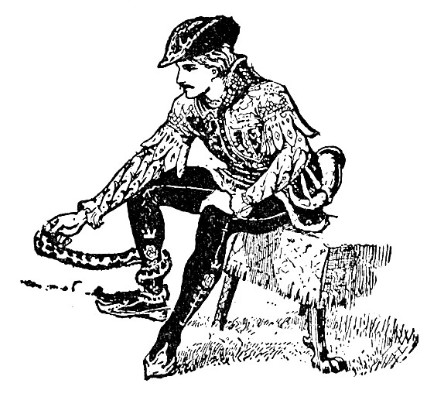 When they were
gone, Furibon took Leander by the hair, and plucked off two or three
handfuls;
nay, he would have throttled him if he could; and forbade him ever to
appear
again in his presence. Leander’s father, offended with Furibon’s
behaviour
toward his son, sent him to a castle of his in the country, where he
always
found himself employment; for he was a great lover of hunting, fishing,
and
walking; he understood painting, read much, and played upon several
instruments; so that he looked upon himself happy in being free from
the
fantastic humours of the prince; nor was he tired in the least with the
solitude of the place. One day as he was walking in the garden, finding
the
heat increase, he retired into a grove, whose lofty and thick-tufted
shade
afforded him a cool retreat. And here he began to play upon his flute
for his
diversion, when he felt something that wound itself several times about
his
leg, and grasped it very hard; he looked to see what it was, and was
surprised
to find it was a great adder: he took his handkerchief, and catching it
by the
head, was going to kill it. But the adder winding the rest of its body
round
his arm, and looking steadfastly in his face, seemed to beg his pardon
and
compassion. At this instant one of the gardeners happened to come to
the place
where Leander was, and spying the snake, cried out to his master, ‘hold
him
fast, sir; it is but an hour ago since we ran after him to kill him; it
is the
most mischievous creature in the world; he spoils all our walks.’
Leander
casting his eyes a second time upon the snake, which was speckled with
a
thousand extraordinary colours, perceived the poor creature still
looked upon
him with an aspect that seemed to beg compassion, and never stirred in
the
least to defend itself. ‘Though thou hast such a mind to kill it,’ said
he to
the gardener, ‘yet as it is come to me for refuge, I forbid thee to do
it any
harm, for I will keep it, and when it has cast its beautiful skin I
will let it
go.’ He then returned home, and carrying the snake with him, put it
into a
large chamber, the key of which he kept himself, and ordered bran,
milk, and
flowers, to be given to it for its delight and sustenance; so that
never was
snake so happy. Leander went sometimes to see it, and when it perceived
him, it
made haste to meet him, showing him all the little marks of love and
gratitude
of which a poor snake was capable, which did not a little surprise him,
though,
however, he took no farther notice of it.
When they were
gone, Furibon took Leander by the hair, and plucked off two or three
handfuls;
nay, he would have throttled him if he could; and forbade him ever to
appear
again in his presence. Leander’s father, offended with Furibon’s
behaviour
toward his son, sent him to a castle of his in the country, where he
always
found himself employment; for he was a great lover of hunting, fishing,
and
walking; he understood painting, read much, and played upon several
instruments; so that he looked upon himself happy in being free from
the
fantastic humours of the prince; nor was he tired in the least with the
solitude of the place. One day as he was walking in the garden, finding
the
heat increase, he retired into a grove, whose lofty and thick-tufted
shade
afforded him a cool retreat. And here he began to play upon his flute
for his
diversion, when he felt something that wound itself several times about
his
leg, and grasped it very hard; he looked to see what it was, and was
surprised
to find it was a great adder: he took his handkerchief, and catching it
by the
head, was going to kill it. But the adder winding the rest of its body
round
his arm, and looking steadfastly in his face, seemed to beg his pardon
and
compassion. At this instant one of the gardeners happened to come to
the place
where Leander was, and spying the snake, cried out to his master, ‘hold
him
fast, sir; it is but an hour ago since we ran after him to kill him; it
is the
most mischievous creature in the world; he spoils all our walks.’
Leander
casting his eyes a second time upon the snake, which was speckled with
a
thousand extraordinary colours, perceived the poor creature still
looked upon
him with an aspect that seemed to beg compassion, and never stirred in
the
least to defend itself. ‘Though thou hast such a mind to kill it,’ said
he to
the gardener, ‘yet as it is come to me for refuge, I forbid thee to do
it any
harm, for I will keep it, and when it has cast its beautiful skin I
will let it
go.’ He then returned home, and carrying the snake with him, put it
into a
large chamber, the key of which he kept himself, and ordered bran,
milk, and
flowers, to be given to it for its delight and sustenance; so that
never was
snake so happy. Leander went sometimes to see it, and when it perceived
him, it
made haste to meet him, showing him all the little marks of love and
gratitude
of which a poor snake was capable, which did not a little surprise him,
though,
however, he took no farther notice of it. 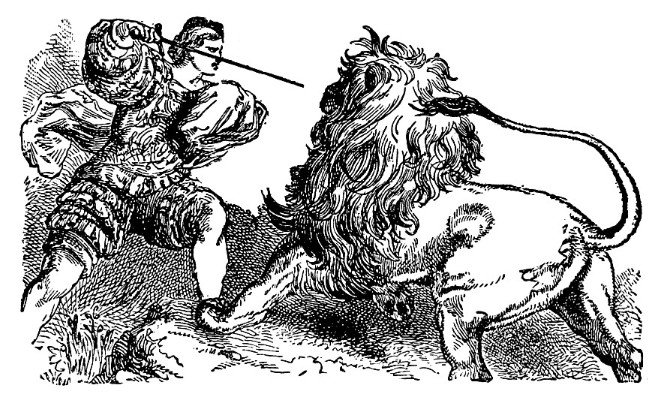 In the meantime all
the court-ladies were extremely troubled at his absence; and he was the
subject
of all their discourse. ‘Alas!’ cried they, ‘there is no pleasure at
court,
since Leander is gone, of whose absence the wicked Furibon is the
cause!’
Furibon also had his parasites, for his power over the queen made him
feared;
so that they told him what the ladies said, which enraged him to a
degree of
fury; and in his passion he flew to the queen’s chamber and vowed he
would kill
himself before her face, if she did not find means to destroy Leander.
The
queen, who also hated Leander, because he was handsomer than her son,
replied,
that she had long looked upon him as a traitor, and therefore would
willingly
consent to his death. To which purpose she advised him to go a hunting
with
some of his confidants, and contrive it so that Leander should make
one, and
that then he might teach him to remember how he gained the love of
every body.
Accordingly Furibon went a hunting, and Leander, when he heard the
horns and
the hounds, mounted his horse and rode to see who it was. But he was
surprised
to meet the prince so unexpectedly: he alighted immediately, and
saluted him
with respect; and Furibon received him more graciously than usual, and
bade him
follow him. All of a sudden he turned his horse, and rode another way,
making a
sign to the ruffians to take the first opportunity to kill him; but
before he
had got quite out of sight, a lion of a prodigious size coming out of
his den
leaped upon Furibon, and pulled him from his horse. All his followers
betook
themselves to flight, and only Leander remained to combat this furious
animal.
He attacked him sword in hand at the hazard of being devoured, and by
his
valour and agility saved the life of his most cruel enemy, who had
fallen in a
swoon for fear, so that Leander was forced to lend him assistance of
another
kind: and when he came to himself, he presented him his horse to
remount. Now,
any other but such an ungrateful wretch, would have highly and
cordially
acknowledged such signal obligations, and made suitable returns: but
Furibon
did no such thing, for he did not even look upon him; nor did he make
use of
his horse to any other purpose, than to ride in quest of the ruffians,
to whom
he repeated his orders to kill him. They accordingly surrounded
Leander, and,
but for his courage he had been certainly murdered. He got with his
back to a
tree, to prevent being attacked behind, and behaved with so much
bravery, that
he laid them all dead at his feet. Furibon, believing him by this time
slain,
made haste to satiate his eyes with the sight; but he came to a
spectacle that
he least expected, for all his ruffians were breathing their last. When
Leander
saw him, he advanced to meet him, and with a submissive reverence,
‘Sir,’ said
he, ‘if it was by your order that these assassins came to kill me, I am
sorry I
made any defence.’ — ‘You are an insolent villain,’ replied Furibon in
a
passion, ‘and if ever you come into my presence again, you shall surely
die.’
In the meantime all
the court-ladies were extremely troubled at his absence; and he was the
subject
of all their discourse. ‘Alas!’ cried they, ‘there is no pleasure at
court,
since Leander is gone, of whose absence the wicked Furibon is the
cause!’
Furibon also had his parasites, for his power over the queen made him
feared;
so that they told him what the ladies said, which enraged him to a
degree of
fury; and in his passion he flew to the queen’s chamber and vowed he
would kill
himself before her face, if she did not find means to destroy Leander.
The
queen, who also hated Leander, because he was handsomer than her son,
replied,
that she had long looked upon him as a traitor, and therefore would
willingly
consent to his death. To which purpose she advised him to go a hunting
with
some of his confidants, and contrive it so that Leander should make
one, and
that then he might teach him to remember how he gained the love of
every body.
Accordingly Furibon went a hunting, and Leander, when he heard the
horns and
the hounds, mounted his horse and rode to see who it was. But he was
surprised
to meet the prince so unexpectedly: he alighted immediately, and
saluted him
with respect; and Furibon received him more graciously than usual, and
bade him
follow him. All of a sudden he turned his horse, and rode another way,
making a
sign to the ruffians to take the first opportunity to kill him; but
before he
had got quite out of sight, a lion of a prodigious size coming out of
his den
leaped upon Furibon, and pulled him from his horse. All his followers
betook
themselves to flight, and only Leander remained to combat this furious
animal.
He attacked him sword in hand at the hazard of being devoured, and by
his
valour and agility saved the life of his most cruel enemy, who had
fallen in a
swoon for fear, so that Leander was forced to lend him assistance of
another
kind: and when he came to himself, he presented him his horse to
remount. Now,
any other but such an ungrateful wretch, would have highly and
cordially
acknowledged such signal obligations, and made suitable returns: but
Furibon
did no such thing, for he did not even look upon him; nor did he make
use of
his horse to any other purpose, than to ride in quest of the ruffians,
to whom
he repeated his orders to kill him. They accordingly surrounded
Leander, and,
but for his courage he had been certainly murdered. He got with his
back to a
tree, to prevent being attacked behind, and behaved with so much
bravery, that
he laid them all dead at his feet. Furibon, believing him by this time
slain,
made haste to satiate his eyes with the sight; but he came to a
spectacle that
he least expected, for all his ruffians were breathing their last. When
Leander
saw him, he advanced to meet him, and with a submissive reverence,
‘Sir,’ said
he, ‘if it was by your order that these assassins came to kill me, I am
sorry I
made any defence.’ — ‘You are an insolent villain,’ replied Furibon in
a
passion, ‘and if ever you come into my presence again, you shall surely
die.’ 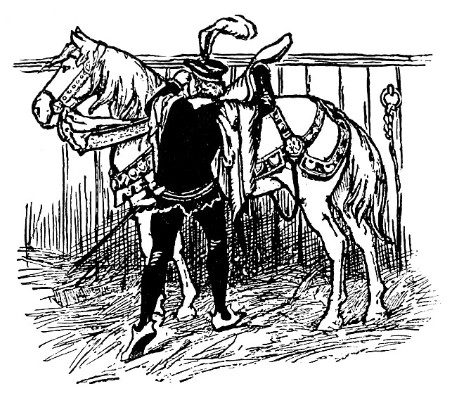 Leander was
infinitely pleased with the noble gifts he had obtained. So having
settled his
affairs, he mounted the finest horse in the stable, called
Gris-de-line, and
was attended by some of his servants in livery, that his return to
court might
sooner be made known. Now you must know that Furibon, who was a very
great
liar, had given out, that had it not been for his courage, Leander
would have
murdered him when they were a hunting, and as he had killed all his
followers
he demanded justice. The king, being importuned by the queen, gave
orders that
he should be apprehended. But when he came, he showed so much courage
and
resolution, that Furibon was too timid to seize him himself; and
therefore he
ran to the queen’s chamber, and told her Leander was come, and prayed
her to
order him to be seized. The queen, who was extremely diligent in every
thing
that her son desired, went immediately to the king; and Furibon, being
impatient to know what would be resolved, followed her without saying a
word,
but stopped at the door, and laid his ear to the key hole, putting his
hair
aside that he might the better hear what was said. At the same time
Leander
entered the court hall of the palace with his red cap upon his head, so
that he
was not to be seen; and perceiving Furibon listening at the door of the
king’s
chamber, he took a nail and a hammer, and nailed his ear to the door.
Furibon
in sharp pain, and all bloody, fell a roaring like a madman. The queen
hearing
her son’s voice, ran and opened the door, and pulling it hastily, tore
her
son’s ear from his head, so that he bled like a pig. The queen, half
out of her
wits, set him in her lap, and took up his ear, kissed it, and clapped
it on
again upon the place; but the invisible Leander, seizing upon a handful
of
twigs, with which they corrected the king’s little dogs, gave the queen
several
lashes upon the hands, and her son as many on the nose; upon which the
queen
cried out, ‘murder, murder!’ — and upon her crying out, the king looked
about
and the people came running in; but nothing was to be seen. Some cried
that the
queen was mad, and that her madness proceeded from her grief to see her
son had
lost one ear; and the king was as ready as any to believe it; so that
when she
came near him, he avoided her; which made a very ridiculous scene.
Leander gave
Furibon some more jerks; and then leaving the chamber, went into the
garden,
and there assuming his own shape, he boldly began to pluck the queen’s
cherries, apricots, and strawberries, and cropt her flowers by
handfuls, though
he knew the queen set such a high value on them, that it was as much as
a man’s
life was worth to touch one. The gardeners, all amazed, came and told
their
majesties, that prince Leander was making havoc of all the fruits and
flowers
in the queen’s garden. ‘What insolence!’ cried the queen: then turning
to
Furibon, ‘My pretty child,’ said she, ‘my dearest love, forget the pain
of thy
ear but for a moment, and fetch that vile wretch hither; take our
guards, both
horse and foot, seize him and punish him as he deserves.’ Furibon,
encouraged
by his mother, and attended by a great number of armed soldiers,
entered the
garden, and saw Leander under a tree, who threw a stone at him, which
wounded
his arm; and the rest of his followers he pelted with oranges. But when
they
came running with a full career towards him, thinking to have seized
him, he
was not to be seen; he had slipped behind Furibon, who was but in a bad
condition already; but Leander played him one trick more, by hampering
his legs
in such a manner with a cord, that he fell upon his nose upon the
gravel, and
bruised his face so that they were forced to take him up, carry him
away, and
put him to bed.
Leander was
infinitely pleased with the noble gifts he had obtained. So having
settled his
affairs, he mounted the finest horse in the stable, called
Gris-de-line, and
was attended by some of his servants in livery, that his return to
court might
sooner be made known. Now you must know that Furibon, who was a very
great
liar, had given out, that had it not been for his courage, Leander
would have
murdered him when they were a hunting, and as he had killed all his
followers
he demanded justice. The king, being importuned by the queen, gave
orders that
he should be apprehended. But when he came, he showed so much courage
and
resolution, that Furibon was too timid to seize him himself; and
therefore he
ran to the queen’s chamber, and told her Leander was come, and prayed
her to
order him to be seized. The queen, who was extremely diligent in every
thing
that her son desired, went immediately to the king; and Furibon, being
impatient to know what would be resolved, followed her without saying a
word,
but stopped at the door, and laid his ear to the key hole, putting his
hair
aside that he might the better hear what was said. At the same time
Leander
entered the court hall of the palace with his red cap upon his head, so
that he
was not to be seen; and perceiving Furibon listening at the door of the
king’s
chamber, he took a nail and a hammer, and nailed his ear to the door.
Furibon
in sharp pain, and all bloody, fell a roaring like a madman. The queen
hearing
her son’s voice, ran and opened the door, and pulling it hastily, tore
her
son’s ear from his head, so that he bled like a pig. The queen, half
out of her
wits, set him in her lap, and took up his ear, kissed it, and clapped
it on
again upon the place; but the invisible Leander, seizing upon a handful
of
twigs, with which they corrected the king’s little dogs, gave the queen
several
lashes upon the hands, and her son as many on the nose; upon which the
queen
cried out, ‘murder, murder!’ — and upon her crying out, the king looked
about
and the people came running in; but nothing was to be seen. Some cried
that the
queen was mad, and that her madness proceeded from her grief to see her
son had
lost one ear; and the king was as ready as any to believe it; so that
when she
came near him, he avoided her; which made a very ridiculous scene.
Leander gave
Furibon some more jerks; and then leaving the chamber, went into the
garden,
and there assuming his own shape, he boldly began to pluck the queen’s
cherries, apricots, and strawberries, and cropt her flowers by
handfuls, though
he knew the queen set such a high value on them, that it was as much as
a man’s
life was worth to touch one. The gardeners, all amazed, came and told
their
majesties, that prince Leander was making havoc of all the fruits and
flowers
in the queen’s garden. ‘What insolence!’ cried the queen: then turning
to
Furibon, ‘My pretty child,’ said she, ‘my dearest love, forget the pain
of thy
ear but for a moment, and fetch that vile wretch hither; take our
guards, both
horse and foot, seize him and punish him as he deserves.’ Furibon,
encouraged
by his mother, and attended by a great number of armed soldiers,
entered the
garden, and saw Leander under a tree, who threw a stone at him, which
wounded
his arm; and the rest of his followers he pelted with oranges. But when
they
came running with a full career towards him, thinking to have seized
him, he
was not to be seen; he had slipped behind Furibon, who was but in a bad
condition already; but Leander played him one trick more, by hampering
his legs
in such a manner with a cord, that he fell upon his nose upon the
gravel, and
bruised his face so that they were forced to take him up, carry him
away, and
put him to bed. 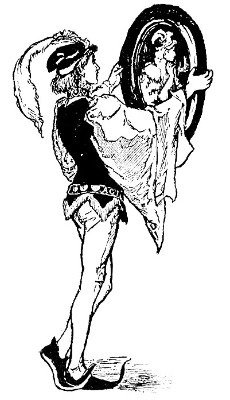 Leander, satisfied
with having seen the delight the princess had taken in beholding the
monkeys,
thought of nothing now but to get a little repose, which he greatly
wanted. But
fearing lest he should enter the apartment of some of the princess’s
maids of
honour, he stayed some time in the great gallery: afterwards, going
down a pair
of stairs, and finding a door open, he entered into an apartment the
most
beautiful and most delightful that ever was seen. There was in it a bed
of
cloth of gold enriched with pearls, intermixed with rubies and
emeralds; for by
this time there appeared daylight sufficient for him to view and admire
the
magnificence of this sumptuous furniture. Having made fast the door, he
composed himself to sleep. He got up very early, and looking about on
every
side, he spied a painter’s pallet with colours ready prepared, and
pencils:
remembering what the princess had said to Abricotina touching her own
portrait,
he immediately (for he could paint as well as the most excellent
masters) seated
himself before a mirror, and drew his own picture first, and then in an
oval,
that of the princess. For he had all her features so strong in his
imagination,
that he had no occasion for her sitting. And as his desire to please
her had
set him to work, never did portrait bear a stronger resemblance. He had
painted
himself upon one knee holding the princess’s picture in one hand, and
in the
other a label with this inscription:
Leander, satisfied
with having seen the delight the princess had taken in beholding the
monkeys,
thought of nothing now but to get a little repose, which he greatly
wanted. But
fearing lest he should enter the apartment of some of the princess’s
maids of
honour, he stayed some time in the great gallery: afterwards, going
down a pair
of stairs, and finding a door open, he entered into an apartment the
most
beautiful and most delightful that ever was seen. There was in it a bed
of
cloth of gold enriched with pearls, intermixed with rubies and
emeralds; for by
this time there appeared daylight sufficient for him to view and admire
the
magnificence of this sumptuous furniture. Having made fast the door, he
composed himself to sleep. He got up very early, and looking about on
every
side, he spied a painter’s pallet with colours ready prepared, and
pencils:
remembering what the princess had said to Abricotina touching her own
portrait,
he immediately (for he could paint as well as the most excellent
masters) seated
himself before a mirror, and drew his own picture first, and then in an
oval,
that of the princess. For he had all her features so strong in his
imagination,
that he had no occasion for her sitting. And as his desire to please
her had
set him to work, never did portrait bear a stronger resemblance. He had
painted
himself upon one knee holding the princess’s picture in one hand, and
in the
other a label with this inscription: 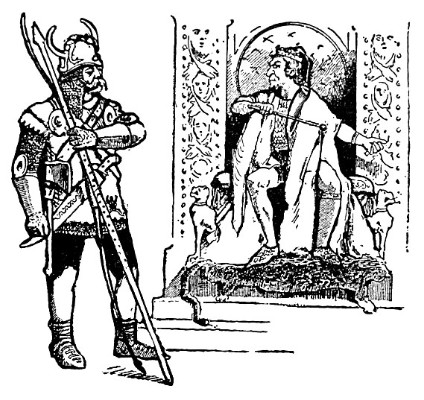 Leander harangued him,
and told him, that the princess preferring a quiet and peaceable life
to the
fatigues of war, had sent him to offer his majesty as much money as he
pleased
to demand, provided he would suffer her to continue in peace; but if he
refused
her proposal, she would omit no means that might serve for her defence.
Furibon
replied, that he took pity on her, and would grant her the honour of
his
protection; but that he demanded a hundred thousand thousand millions
of
pounds, and without that sum paid he would not return to his kingdom.
Leander
answered that such a vast sum would be too long in counting, and
therefore if
he would say how many rooms full he desired to have, the princess was
generous
and rich enough to satisfy him. Furibon was astonished to hear, that
instead of
demanding an abatement, she would rather offer an augmentation; and it
came
into his wicked mind to take all the money he could get, and then seize
the
Amazon, and kill her, that she might not return to her mistress. He
told
Leander, therefore, that he would have thirty chambers filled with
pieces of
gold, and that then, upon his royal word, he would return. Leander
being
conducted into the chambers that were to be filled, he took his rose
and shook
it, till every room was filled with all sorts of coin. Furibon was in
an
ecstasy, and the more gold he saw, the greater was his desire to seize
the
Amazon, and get the princess into his power; so that when all the rooms
were
full, he commanded his guards to seize her, alleging she had brought
him counterfeit
money. Accordingly, the guards were going to lay hold upon the Amazon,
but
Leander put on his little red cap and disappeared. The guards believing
she had
escaped, ran out and left Furibon alone; when Leander, availing himself
of the
opportunity, took the tyrant by the hair, and twisted his head off with
the
same ease he would a pullet’s, nor did the little wretch of a king see
the hand
that killed him.
Leander harangued him,
and told him, that the princess preferring a quiet and peaceable life
to the
fatigues of war, had sent him to offer his majesty as much money as he
pleased
to demand, provided he would suffer her to continue in peace; but if he
refused
her proposal, she would omit no means that might serve for her defence.
Furibon
replied, that he took pity on her, and would grant her the honour of
his
protection; but that he demanded a hundred thousand thousand millions
of
pounds, and without that sum paid he would not return to his kingdom.
Leander
answered that such a vast sum would be too long in counting, and
therefore if
he would say how many rooms full he desired to have, the princess was
generous
and rich enough to satisfy him. Furibon was astonished to hear, that
instead of
demanding an abatement, she would rather offer an augmentation; and it
came
into his wicked mind to take all the money he could get, and then seize
the
Amazon, and kill her, that she might not return to her mistress. He
told
Leander, therefore, that he would have thirty chambers filled with
pieces of
gold, and that then, upon his royal word, he would return. Leander
being
conducted into the chambers that were to be filled, he took his rose
and shook
it, till every room was filled with all sorts of coin. Furibon was in
an
ecstasy, and the more gold he saw, the greater was his desire to seize
the
Amazon, and get the princess into his power; so that when all the rooms
were
full, he commanded his guards to seize her, alleging she had brought
him counterfeit
money. Accordingly, the guards were going to lay hold upon the Amazon,
but
Leander put on his little red cap and disappeared. The guards believing
she had
escaped, ran out and left Furibon alone; when Leander, availing himself
of the
opportunity, took the tyrant by the hair, and twisted his head off with
the
same ease he would a pullet’s, nor did the little wretch of a king see
the hand
that killed him. 
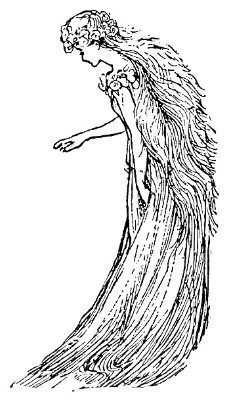 The princess was
gone to bed; and the profound respect he had for her would not permit
him to
enter her chamber; he retired, therefore, into his own; but, by what
accident I
know not, he forgot to make fast the door, as he was wont to do. The
princess
could not sleep for the heat, and the disquiet of her mind; so that she
arose
before the sun, and in her morning dress went down into this lower
apartment;
but how strangely was she surprised to find Leander asleep upon the
bed!
However, she had then leisure enough to take a full view of him without
being
perceived, and to convince herself that he was the person whose picture
she had
in her diamond box. ‘It is impossible,’ said she, ‘that this should be
a
spirit, for can spirits sleep? Is this a body composed of air and fire,
without
substance, as Abricotina told me?’ She softly touched his hair, and
heard him
breathe, and the sight of him raised alternate fear and pleasure in her
breast.
But while she was thus attentively surveying him, her mother the fairy,
entered
with such a dreadful noise, that Leander started out of his sleep. But
how
strangely was he surprised, how deeply afflicted, to behold his beloved
princess in the most deplorable condition! — her mother dragged her by
the
hair, and loaded her with a thousand bitter reproaches. In what grief
and
consternation were the two young lovers, who saw themselves now upon
the point
of being separated forever! The princess durst not open her lips to the
incensed fairy, but cast her eyes upon Leander, as it were to beg his
assistance. He judged rightly, that he ought not to deal by rugged
means with a
power superior to his, and therefore he sought by his eloquence and
submission
to move the incensed mother. He ran to her, threw himself at her feet,
and
besought her to have pity upon a young prince, who would never change
his
affection for her daughter, but would make it his sovereign felicity to
render
her happy. The princess, encouraged by his example, also embraced her
mother’s
knees, and told her, that without the king she should never be happy,
and that
she was greatly obliged to him.
The princess was
gone to bed; and the profound respect he had for her would not permit
him to
enter her chamber; he retired, therefore, into his own; but, by what
accident I
know not, he forgot to make fast the door, as he was wont to do. The
princess
could not sleep for the heat, and the disquiet of her mind; so that she
arose
before the sun, and in her morning dress went down into this lower
apartment;
but how strangely was she surprised to find Leander asleep upon the
bed!
However, she had then leisure enough to take a full view of him without
being
perceived, and to convince herself that he was the person whose picture
she had
in her diamond box. ‘It is impossible,’ said she, ‘that this should be
a
spirit, for can spirits sleep? Is this a body composed of air and fire,
without
substance, as Abricotina told me?’ She softly touched his hair, and
heard him
breathe, and the sight of him raised alternate fear and pleasure in her
breast.
But while she was thus attentively surveying him, her mother the fairy,
entered
with such a dreadful noise, that Leander started out of his sleep. But
how
strangely was he surprised, how deeply afflicted, to behold his beloved
princess in the most deplorable condition! — her mother dragged her by
the
hair, and loaded her with a thousand bitter reproaches. In what grief
and
consternation were the two young lovers, who saw themselves now upon
the point
of being separated forever! The princess durst not open her lips to the
incensed fairy, but cast her eyes upon Leander, as it were to beg his
assistance. He judged rightly, that he ought not to deal by rugged
means with a
power superior to his, and therefore he sought by his eloquence and
submission
to move the incensed mother. He ran to her, threw himself at her feet,
and
besought her to have pity upon a young prince, who would never change
his
affection for her daughter, but would make it his sovereign felicity to
render
her happy. The princess, encouraged by his example, also embraced her
mother’s
knees, and told her, that without the king she should never be happy,
and that
she was greatly obliged to him.  Click the book image to turn
to the next Chapter.
Click the book image to turn
to the next Chapter.