 Web
and Book design, Web
and Book design, Copyright, Kellscraft Studio 1999-2005 (Return to Web Text-ures) |
Return to the Previous Chapter |
 (HOME) |
|
CHAPTER
XIX AN
ADVENTURE IN PURE ROMANCE  ATHANIEL HAWTHORNE, master
of the imaginatively romantic, tried to make his very life one of
actual
romance and never more so than when, with the fire as if of romantic
youth,
although he was then well on, toward forty, he flung himself and his
little
fortune into the adventure of Brook Farm. ATHANIEL HAWTHORNE, master
of the imaginatively romantic, tried to make his very life one of
actual
romance and never more so than when, with the fire as if of romantic
youth,
although he was then well on, toward forty, he flung himself and his
little
fortune into the adventure of Brook Farm.Throughout his life
he was
eager to find the romance of actual living. His ideal days at the Old
Manse,
rambling in the woods and floating on the Concord or Assabeth, his life
in
romantic Italy, his love for the romantic countryside of England, his
return,
toward the close of his life, to the romantic surroundings of his
beloved
Concord – always he sought for the finest possible in life: he aimed
for rugged
independence but tried to achieve independence romantically. And the
most
romantic feature of his life was his connection with Brook Farm. He did not start that
remarkable movement. He had nothing to do with its inception. But in
its
possibilities it so appealed to him that he went into it with
enthusiastic
buoyancy. Those who think of Hawthorne only as a cold and uncordial
recluse
miss altogether the Hawthorne who rowed and camped and talked with
Ellery
Channing; they miss altogether the Hawthorne who threw himself with
unreserve
into the experiment of Brook Farm. George Ripley, a man
of high
ideals who had found it due to his own conscience to leave the
ministry, was
the founder. He dreamed of a community in which mental advancement and
physical
well-being would go hand in hand; he dreamt of a society of
intelligent,
cultured, cultivated people, who were to live together, with each one
improving
himself and all the others, and each one doing his share of the mental
and
physical toil which would be necessary to keep up the expenses of
living. Life
was to be simplified and made glorious. There was to be a school, and
there
were to be mechanical industries, and fruit and vegetables and milk
were to be
the product of their own farm. Each one, man or woman, was to do his
share of
work, physical and mental, and all were to participate in the mutual
intellectual benefits of association. After the founding, by a little
group of
friends, no one was to be admitted without probation and a vote, and,
thus
safeguarded against undesirables and impracticables, the community was
to
represent the mental activity of a wide variety of thinkers in
conjunction with
the plain good sense of chosen farmers and mechanics. Each thinker was
at the
same time to be a worker, and each worker a thinker. The venture was begun
in the
spring of 1841. The shares were five hundred dollars each, and
twenty-four were
taken by the first group, the founders. And Hawthorne did not wait
coldly to
see if it were to be a success. He was eagerly ready to devote himself
to the
work and to associate with other chosen souls. Nor was his enthusiasm
merely of
the spirit; he showed it practically, with a pathetic earnestness. He
had saved
– he, the master of American fiction – he had saved one thousand
dollars from
his salary in the Boston Custom House, and this sum he paid in for two
of the
Brook Farm shares. There could be no deeper proof of his sincerity. Hawthorne was even
made
chairman of the finance committee – the last position in the world, one
would
think, for so unworldly a man; and it is vastly interesting to know
that, after
paying $10,500 for the property the committee promptly negotiated a
mortgage
loan of $11,000 for the purpose of expenses and new buildings. A
mortgage for
more than the purchase price! The Brook Farmers
were to
fleet the time carelessly, as they did in the golden world, but they
were also
to work. Charles A. Dana, then a young man, joined. George William
Curtis
joined. The man who was to achieve fame as Father Hecker, founder of
the
Paulists, joined. Ripley was the guiding spirit. Emerson looked on with
sympathy and encouragement, even though Brook Farm did not draw him
from his
beloved Concord. Margaret Fuller did not join, but she lent to the
community
the frequent gleam of her personality. That Hawthorne daily milked a
cow is one
of the joyful memories of the Farm, and that he playfully christened
the cow
Margaret Fuller, because of its intelligent face and reflective
character, is
another. But Brook Farm was
not a
practical success. The land that Ripley had picked out was wretchedly
poor for
farming, nor were the mechanic industries, such as sash-making, at all
prosperous. But for a while the effort went on nobly. There was
wholesome life
and companionship. Scholars and gentlemen hoed and plowed and milked;
well-bred
ladies washed clothes and scrubbed floors. The nights were filled with
talk and
music and cheerfulness. Some new buildings were erected, which seem,
from
descriptions, to have been more astonishingly ugly than could fairly
have been
expected of romantic philosophers, and perhaps it is well that they
burned
down, as they did, either while the Brook Farmers were there or in the
years
after their departure. I think the fact that
there
were more men than women militated against success; and it seems
surprising
that more women did not join; with such men as Hawthorne and Dana and
Ripley
and Curtis there, it would seem that women would joyously have entered
into the
enthusiasm of it all. In this twentieth century they doubtless would,
but in
the 1840's women were still cabined, cribbed, confined. It is interesting,
and it is
striking, that not one of the Brook Farmers ever admitted that Brook
Farm was a
failure. Of course, they admitted that the community broke up, and with
financial loss, but all of the people connected with it, both men and
women,
always believed that there had, for all of them, been more of profit
than of
loss; each was sure that every one was benefited. It was really a
glorious
thing to do, a glorious effort to make. Hawthorne himself,
when at
length he saw that the movement was doomed to failure, was wise enough
to
leave. He seems to be picturing himself when, in the novel that was one
of the
fruits of Brook Farm, the "Blithedale Romance," he represents Miles
Coverdale, on the eve of his departure, thus setting down his thoughts
of the
people he was to meet out in the world, away from his companions at the
Farm:
"It was now time for me to go and hold a little talk with the
conservatives, the writers of the North
American Review, the merchants, the politicians, the Cambridge
men, and all
those respectable old blockheads who still kept a death-grip on one or
two
ideas which had not come into vogue since yesterday morning." He left, and married
the
woman of his choice, and continued on his career of fame, winning more
and more
the reputation of being cold and repellent – which his associates at
Brook Farm
knew so well that he was not! And he wrote his novel of the place the
name of
Blithedale itself declaring what charm and poetry he had found there –
and he
incorporated in that story the feeling of what Brook Farm had meant to
him. Brook Farm itself is
still
largely, in appearance, what it was when it knew the wonderful
community. The
spot is but ten or eleven miles from Boston Common, yet urban and
suburban
development have alike missed it, except as to a gathering of
cemeteries in the
region close by. It is easily reachable, by train to West Roxbury, or
even more
conveniently by trolley. And there are still the traces of the main
entrance
and gateway; there is still the same general aspect, of walls trailed
over with
the scarlet barberry, of rolling meadows and woodland, of dips and
hollows
alternating with little heights, of pine trees, scattered or thickly
massed. A Lutheran Home
stands on
the spot where the main building of the farmers stood, and, such having
been
the fiery devastation, the only house standing that stood when they
were there
is a little place which somehow gained the name of "Margaret Fuller's
cottage"; for the reason, as it was long ago quaintly said, that it was
the only building there with which Margaret Fuller had nothing to do!
But it
was a building with which, undoubtedly, Hawthorne and Dana had to do,
and
probably all of them. It stands on a still
lonely
spot; a small house, steep-roofed, four-gabled, of broad and unplaned
clapboards, and with windows of so oddly unusual a size as to lead to
the
impression that the sash are probably some of the very sash that the
Brook
Farmers made and unsuccessfully tried to market. Pictorial
pudding-stones of
enormous size dot the landscape – one marvels that with such outward
and
visible signs of an unkindly soil Ripley could ever have deceived
himself and
the others into faith that the land had possibilities! – and
immediately in
front of this cottage is such a stone, over six feet in height and of
twice
that length. All about stretches away a land without levels, with
little pools
in the hollows, with trees in clumps and singles and masses, with rocky
rolling
swells, and with the Charles flowing quietly by. And the breeze blowing
across
the meadows blows fresh from a land of pure romance. About the same
distance from
the center of Boston as is Brook Farm, but off to the eastward, near
the coast,
are two small homes which also are important in New England history and
which
also stand for romance, though here the romance is of a different
character,
for it is the typically American romance of success, the romance of
rising from
humble surroundings to lofty place. It is in Quincy that
these
two small homes stand, the little homes in which were born two men of
American
romance. And I do not mean John Hancock, although he was born in
Quincy, for he
was not of financially straitened ancestry; I mean those two
Quincy-born men,
John Adams and his son John Quincy Adams. And the town of Quincy is the
only
place that enjoys the honorable distinction of being the birthplace of
two
Presidents of the United States. The houses in which these two Presidents that were to be, were born, are of rather humble type, but sweet and cheerful and comfortable, with an air, as it were, of self-respect. The two stand close to each other, almost touching shoulders. One looks first at the house in which John Adams was born, small and unimpressive as it is, and then at the house to which he took his wife, a home just as simple, where their son John Quincy was born. It is amazing and it is inspiring to realize that from such homes men could rise to the highest places of leadership and to the very Presidency, and the close conjunction of the two houses adds much to the dramatic effect. 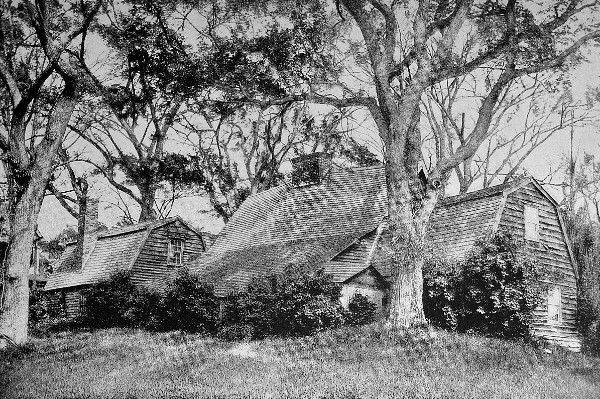 The Fairbanks House, Dedham - Probably the oldest in New England John Adams fell in
love with
a connection of the Quincys, a powerful and wealthy family, and they
from the
first discerned his unusual qualities and did not oppose the match, and
the
marriage was of great practical aid in his advancement. And his wife,
Abigail
Smith, instead of being one who was always urging him to extravagance
or
pretentiousness, as a daughter of the wealthy Quincys might so easily
have
been, was a woman of much good sense and of moderation. It is
delightful to
find her writing to him, when she learns that he is likely to be sent
as
ambassador abroad, and when it would be expected that she would eagerly
urge
such brilliant advancement, that "this little cottage has more
heart-felt
satisfaction for you than the most brilliant court can afford." And
that
this Abigail of the aristocrats was really a finely sturdy American was
further
shown in many ways, as by her answer to an Englishman, on the ship on
which she
herself crossed the ocean; for when he asked, over and over, what was
the
family of this or that American, she told him "that merit, not title,
gave
a man preeminence in our country; that I did not doubt it was a
mortifying
circumstance to the British nobility to find themselves so often
defeated by
mechanics and mere husbandmen; but that we esteemed it our glory to
draw such
characters not only into the field but into the senate." Adams, from such a
humble
birthplace and such a humble home, was quite equal to upholding his
dignity and
that of his country abroad, and to hold with honor the office of
President of
the United States. But it is rather amusing, and it is highly
interesting,
looking at these plain and little homes, to remember that, in a letter
to his
wife, in 1797, after his election to the Presidency, he wrote,
addressing his
wife as "My dearest friend," a form in use at that period between
married folk, and signing himself "Tenderly yours," a form even yet
not entirely gone out of fashion: "I hope you will not
communicate to anybody the hints I give you about our prospects; but
they
appear every day worse and worse. House rent at twenty-seven hundred
dollars a
year, fifteen hundred dollars for a carriage, one thousand for one pair
of
horses, all the glasses, ornaments, kitchen furniture, the best chairs,
settees, plateaus, &c., all to purchase, and not a farthing
probably will
the House of Representatives allow, though the Senate have voted a
small
addition. All the linen besides. I shall not pretend to keep more than
one pair
of horses for a carriage, and one for a saddle. Secretaries, servants,
wood,
charities which are demanded as a right, and the million dittoes
present such a
prospect as is enough to disgust any one. Yet not one word must
we
say. We must stand our ground as long as we can." John Adams was very
much of
a man; and it should be remembered that it was he who, New Englander
though he
was, was broad enough to nominate, in the Continental Congress, George
Washington to be commander-in-chief of the American forces. Jefferson
said of
John Adams that he was "our Colossus on the floor; not graceful, not
elegant, not always fluent, but with power both of thought and of
expression." Adams and Jefferson,
it will
be remembered, both lived until the fiftieth anniversary of the event
with
which both had so much
to do, the making of the Declaration; and both, by one of the
most
remarkable coincidences in history, died not only in 1826, the fiftieth
year,
but actually on July the Fourth. The two Adamses, the
two
Presidents, father and son, were not only born in adjoining houses, but
sleep
their last sleep in adjoining tombs; for both lie in granite chambers
beneath
the portico of the Stone Temple, that fine-looking church, solid and of
excellent proportions, with round-topped tower, which faces into Quincy
Square. There are at least
three
homes of the Quincy family in Quincy, but it is one in particular that
is meant
when the "Quincy homestead" is referred to by any one of the
neighborhood. (The Massachusetts way of pronouncing "Quincy" is as if
the family suffer from a well-known affection of the throat.) The homestead is away
from
the thick-settled part of the city of Quincy, and is set nestlingly
beside a
stream, now little, which in the long ago was navigable for smallish
boats. It
is a great dormer-windowed mansion, quaint, rambling and romantic, with
attractive roof lines, and is now in the possession of a patriotic
society, and
filled with its own furniture of the past. It is a house of innumerable
spacious and low-ceilinged rooms; it was always an aristocrat's house,
and
presumably it was deemed none the less aristocratic from its owner
being a bit
of a buccaneer. It is a house of one romantic room after another; a
house
unusually full of charm, even compared with other ancient houses; a
house
dating back, as to its main portion, for over two centuries; that main
part
having incorporated within it a still earlier portion dating back into
the
sixteen hundreds. And it contains what seems surely the most elaborate
and most
cleverly constructed secret hiding space, between floors, in America,
this
space being an entire false room, entered by a secret entrance, and of
quite
unsuspected existence through any outward appearance, the room above it
and the
room below being reached separately from each other from another part
of the
house. This building, so
extremely
interesting in appearance and age, possesses a definite interest in
that it was
the home of the two Dorothy Q.'s, those delightfully cognomened young
women who
float with that romantic designation through New England history and
reminiscences. And the adherents of either one of the Dorothy Q. Is are
always
ready to do battle for her as being of more prominence than the other
Dorothy
Q. Perhaps none but New Englanders would be interested in following out
the
precise genealogical lines, but at least one may say that the Dorothy
Q. who is
remembered because she figures pleasantly in American poetry, was born
here in
1709, and that the other Dorothy Q. was born here some forty years
later and
became the wife of John Hancock. A pleasant tradition
still
keeps in mind that it was in a room with a beautiful wallpaper newly
imported
from Paris that Hancock proposed to his Dorothy Q. and was accepted,
and the
very room is remembered and the very wallpaper is still on the walls;
an oddly
striking paper, with much of queer red in its composition and with
little
Cupids and Venuses often recurring. A little farther
along the
coast, to the southward from Quincy, is Marshfield, long the beloved
home of
Daniel Webster, and where he died. To some extent the mighty Webster
has
already been forgotten; his immense and overshadowing fame has to quite
a
degree vanished; and this is largely owing to his having disappointed
all New
England by his ill-fated "Ichabod" speech on the subject of
compromise with slavery. And that Whittier, a poet far from first-rate,
could
by his tremendous "Ichabod" lines be conqueror of one of the mighty
orators of all history, shows curiously the essential strength of
literature as
compared with oratory. The people of New England could not forget that
they had
honored and trusted Webster absolutely, they could not but see that he
acted
against their profoundest principles; they might in time have forgiven,
through
realizing that Webster discerned, what they could not discern, how
dreadful
would be the impending conflict, and that it was because of this that
he was
willing to temporize. But Whittier wrote "Ichabod," and the proud
crest of Webster sank. Webster owned two
thousand
acres of land, bordering on the sea. Much was woodland; much was given
over to
fruit trees; he was an enthusiastic farmer and tree grower. Planted
under his
personal direction were fully a hundred thousand trees, and he had a
great
stock of pedigreed cattle, with many horses and even some llamas; he
had
poultry of the finest breeds, and even peacocks. He saw to the making
of paths
and pools and walls. He lived like a princely farmer, spending money
with
lavishness. But always first in his affection was the ocean, with its
might and
mystery. His house was burned,
some
years after his death, and all the barns and outbuildings but a single
tiny
little one-story structure, really but a but, which he sometimes used
as an
office or study, in accordance with the practice of the old-time New
England
lawyers. Another house has been built, but there is a general sense of
something lost and wanting. It is pleasant to
know that
Webster's own neighbors, his immediate friends, in Marshfield and
Boston, were
loyal to him at the last; it is pleasant to know that after his final
speech,
in Boston, in 1852, the year in which he died, a huge crowd followed
him to his
hotel in that city and that he was escorted by a thousand horsemen; it
is
pleasant to know that, going down to Marshfield, thousands and
thousands met
him, men and women and children, and that many of them accompanied him
throughout the ten miles from the station to his home – there was then
no
nearer station – and that for all that distance the way was lined with
his admirers,
strewing garlands. When he knew he was
dying,
he loved to look off toward the beloved ocean, and at night he loved to
see the
light that swung at the masthead of his yacht; and as Death crept
nearer, he
one day had himself placed at his door, while his cattle and horses
were led by
in a long procession. On the very last of
his days
he was heard to murmur, "On the 24th of October all that is mortal of
Daniel Webster will be no more." He was buried in his favorite costume,
with blue coat with gilt buttons, with white cravat, with silk
stockings,
waistcoat, trousers, patent-leather shoes and gloves. And more than
eight
thousand people solemnly followed his body to the grave. It is a lonely place,
a spot
of peculiar desolateness, where Webster lies buried. It is a long
distance from
any house; a little tablet by the roadside, near the house that has
been built
where his own home once stood, points the traveler down a pathway that
winds
far off to a distant burying-ground, upon a little bit of low-rising
land, in
the midst of a great salt-marsh meadow. It is desolate, it is lonely.
Once an
ancient little church stood beside this burying-ground, but it long ago
vanished, leaving no sign of why the few graves are here, although
among them
are some of very early Pilgrim stock. But the lonely graveyard is not
neglected, and it is impressive in its barrenness, its desolation. In
all, it
is even beautiful here, with a strange and somber beauty. One thinks of his
triumphant
oratory, his splendidness, of the power he possessed, of the idolatry
he
inspired. And what superb poise the man possessed, whether one trusts
to
humorous stories or to grave! He could thrill immense audiences with a
word, a
gesture, even with his moments of stately silence. It might have been
of the
Orator instead of the Bellman that the poet wrote when he said: "They
all
praised to the skies – such a carriage, such ease and such grace! Such
solemnity, too! One could see he was wise the moment one looked on his
face!" That is just it: Webster not only was a great man, but he looked
the part as much as any man ever did. But there was also a cheerfully human side to him; with his friends, he was a delightful dinner companion and story-teller, cheerful and gay; yet even at dinner he did not forget his stately poise; I suppose he could not put it away even if he would; and one remembers the perhaps apocryphal tale of his carving, at dinner, and unfortunately letting the bird slip into his neighbor's lap, and of the booming intonation of his calm request, "May I trouble you for the turkey, madame?" And one remembers the immensely illustrative tale, not apocryphal, of Webster at the Jenny Lind concert in Boston, when the Swedish singer, aglow with happiness, came out and bowed to the great audience in response to tumultuous acclaim and the mighty Daniel arose in his place in the audience and returned the bow! 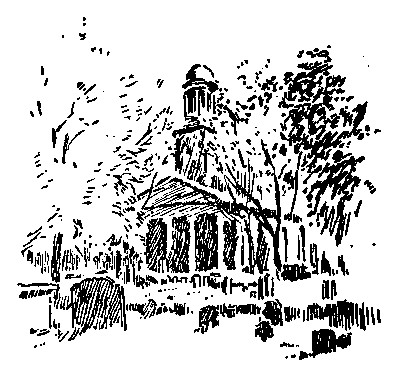 |
 Click the book image to turn to the next Chapter.