 Web
and Book design, Web
and Book design, Copyright, Kellscraft Studio 1999-2005 (Return to Web Text-ures) |
Click Here to return to Book of Boston Content Page Return to the Previous Chapter |
 (HOME) |
|
CHAPTER
XXIII PLYMOUTH
AND PROVINCETOWN  LOSE behind Plymouth, close beside this home of the
Pilgrims, close to this spot where three hundred years ago began the
campaign
against the wilderness, there is still an immense tract of wild and
lonely
woodland, there are miles and miles of wildness almost unbroken except
by
roads; there are seemingly endless stretches of oak trees intermingled
with
lovely pines and sentineled by cedars, and underneath is a tangle of
huckleberries and sweet fern and bracken, with frequently the white
sand
gleaming through the darker soil that has tried to accumulate. In the
very
heart of this wilderness one may come with almost startling
unexpectedness upon
some old house aflame with trumpet-vine or white with flowering masses
of
paniculata, but the few homes are widely isolated. The region is even
now wild
enough for one to imagine the presence of the prowling bear and the
prowling
Indian of early days; and, in fact and without imagination, the deer
and the
fog are frequently to be met. "Ye whole countrie, full of woodes &
thickets, presented a wilde & savage heiw," as Bradford himself,
leader
among the Pilgrims, wrote. Much of Massachusetts has reverted to
wilderness;
immense tracts that once were a succession of farms have gone back to
scrub
woodland; but nowhere is it more noticeable than here. LOSE behind Plymouth, close beside this home of the
Pilgrims, close to this spot where three hundred years ago began the
campaign
against the wilderness, there is still an immense tract of wild and
lonely
woodland, there are miles and miles of wildness almost unbroken except
by
roads; there are seemingly endless stretches of oak trees intermingled
with
lovely pines and sentineled by cedars, and underneath is a tangle of
huckleberries and sweet fern and bracken, with frequently the white
sand
gleaming through the darker soil that has tried to accumulate. In the
very
heart of this wilderness one may come with almost startling
unexpectedness upon
some old house aflame with trumpet-vine or white with flowering masses
of
paniculata, but the few homes are widely isolated. The region is even
now wild
enough for one to imagine the presence of the prowling bear and the
prowling
Indian of early days; and, in fact and without imagination, the deer
and the
fog are frequently to be met. "Ye whole countrie, full of woodes &
thickets, presented a wilde & savage heiw," as Bradford himself,
leader
among the Pilgrims, wrote. Much of Massachusetts has reverted to
wilderness;
immense tracts that once were a succession of farms have gone back to
scrub
woodland; but nowhere is it more noticeable than here.The ancient town of
Plymouth
still has much of an old-fashioned aspect in spite of the inroad of
modern
buildings; it is still a comely American town, sitting decorously
beside the
sea, with its older portion close to the water-front, where a few old
houses
still stand, in shingle-sided irregularity, beneath the low-rounding
rise where the first burials were
made in graves that were left
unmarked from fear of the Indians creeping in and counting the deaths;
away
from this there sweeps a little stretch where the greater part of the
town was
built and where still is much of an aspect of staid dignity; and behind
all
this is the watch-hill – that became the principal graveyard of the
settlement. Little fishing boats
lie at
their moorings, and fishermen in yellow oil-skins lean, gregariously
gossiping,
against the buildings beside the piers, and nets are stretched out to
dry, and
sea-gulls go curving and dipping and flying, and across the water are
barrier
spits of sand, greened with grass, and along the shore are scattered a
few
attractive homes, with greenery close about them, and far out at the
left of
the bay and far out at the right, are jutting promontories, tree-clad.
But it
is not a stern and rock-bound coast; it is a sandy coast; and it is
seldom that
the breaking waves dash high in this sheltered nook; and yet they were
inspired
lines that Felicia Hemans wrote, for they represented the bravery and
the
loneliness of it all, the unbreakable, undaunted spirit that moved
those early
Pilgrims; and the lines ought never to be forgotten by Americans: Not as the flying come, It is curious that
this
British woman so felt and expressed the spirit of the band of exiles
who moored
their bark on this wild New England shore; and it is curious that she,
who
could so perfectly express the feeling of early America, has better
than any
other poet expressed the sense of the beauty and finish of England, in
her
lines beginning "The stately homes of England, how beautiful they
stand!" On this sandy shore
it must
have been difficult for the Pilgrims to find a boulder big enough to
land upon,
but, as if recognizing that posterity would really need a Plymouth
Rock, they
managed to find one, and here it is, carefully preserved, at the
waterside,
after having wandered about the town, from one stopping-place to
another, in
the course of the centuries, and even having suffered in its travels a
fracture
which was carefully repaired. It now has the protection of a stone
canopy and a
gated iron fence, but the gates are usually kept open, for there is
such a
general and profound respect for this stone that no one thinks of
treating it
carelessly, and I have seen even little children who have run under the
canopy
in a sudden shower rub their hands gently over the stone as if in
reverence. It
has not been chipped or spoiled, as stone monuments open to the
opportunities
of vandalism are so likely to be. Round about the memorial is a little
grassy
spot that has been made charming with roses and barberries. The low rise that was
originally the burial-hill is still surprisingly steep, for it has
never been
graded away; a little back from it stand a hotel and some homes, but at
the
very edge a little landslide a few years ago uncovered some of the
bones of the
very earliest settlers. Away from this low rise there runs the little
stream
beside which the Pilgrim leaders first met Massasoit, and the garden
plots that
lie behind the backs of the houses mark the original "meersteads" or
homestead limits of the original allotment. Old records have been
kept,
and among them is one narrating how, seven years after the landing, the
Pilgrims divided by lot, with meticulous particularity, the few cattle
and
goats into thirteen portions each: "the Greate Black cow came in the
Ann
"as it is set down; "the red Cow and the Heyfers," so it is
written, with freedom of spelling and capitalization, "came in the
Jacob"; and there are various details in regard to "the greate white
backt cow" and the other stock. Plymouth possesses a
great
deal of attractiveness, and indeed real beauty. The deep blue of the
water,
edged by the promontoried greenery of trees, makes a charming frontage,
and
within the town itself there are many huge trees, some of them
carefully marked
with records of their planting; there are great elms, and there are
lindens of
giant size. In any direction one may see masses of dahlias, or the
flowering
honeysuckle, and there are ancient gardens charmingly in closed within
the
greenery of ancient box. There are houses of
red
brick and there are houses of white-painted frame; there are houses
with
gambrel roofs and great old chimneys and pillared porticoes. There is
still
many a dignified old front, broad and generous with doorway of
loveliness;
there are still some of the old-time fan-windows over the entranceways;
there
are reeded pilasters; there is still much of the bulgy old-time
window-glass. On the way up the low
slope
from the water is an interesting looking old gambrel-roofed house with
wooden
front and brick ends, and somehow it pleased me to hear a little girl
who was
sitting on the steps called "Barbara" by her father, for the name
seemed to fit the old-time house as did also the ancient looking
pussy-cat
sitting there in dignified sedateness. And a tablet upon this old house
shows
that it stands on the spot where an even more interesting house once
stood for
it was "erected by the Commonwealth of Massachusetts to mark the site
of
the first house built by the Pilgrims. In that house on the 27th of
February,
1621, the right of popular suffrage was exercised and Miles Standish
was chosen
captain by a majority vote." Just up the slope and
but a
short distance from the Rock, stands an old mansion of interest as a
survival
of early architecture, although of a time much more recent than that of
the
Pilgrims; it is a house of unusually noble beauty and spaciousness and
about it
is a garden of flowered charm. The modern and
unattractive
that have come into the town may easily be disregarded by those who
desire to
see old Plymouth. Much of the old, much that has made the atmosphere of
the
past and which rouses memories of the brave old times, is still here. A
streak
of meticulousness must have become implanted by the early itemizing of
the
thirteen shares of cattle, for in what other town would one find a
notice to
motorists warning them of a dangerous corner fifty-eight feet away! And
as to
other public notices – well, stop to gaze at some interesting-looking
tablet
and you will probably find it a warning that there will be a fine of
twenty
dollars if you spit on the sidewalk. The First Church in
Plymouth
– although it is really the fifth first church – is tableted as a
"meeting
house," although in reality it is a solid stone building, early Norman
in
design. It faces the little town square, where three veteran elms shade
the
yellow sand that covers the open space. Diagonally across from this
structure,
and also looking out upon the little square, is a much older church, a
highly
attractive building in white painted wood, with white pillars, and
attractive
pillared tower. This church is called the Church of the Pilgrimage. Burial Hill, the
height that
rises from these two churches, is dotted thick with gravestones, and
among them
are noted the boundary spots of the early fortifications. This hill was
beacon
hill and fort hill and burial hill in one, as if to show very
materially that
life and death depended upon watchfulness and fighting. On the highest
part is
a stone that marks the grave of doughty old Bradford, the several times
governor. Looking down upon the town from this hilltop one sees a broad
massing
of the greenery of trees, with here and there the white or red of the
houses
peeping through and with three lovely belfries rising in variant charm,
one
being covered with copper, another being all white, and the third
showing a top
of gold. Standing on top of
this hill
the memory came to me of the top of that hill on Hope Bay, in Rhode
Island,
where King Philip made his last stand against the white man; and I
thought of
it not only because the two hills are in a general way alike in looking
over an
expanse of land and water along a generally level coast line, but
because the
head of King Philip, that noble Indian who had been given his name by
the white
men from King Philip of Macedon, was brought here to Plymouth and
placed
publicly on a spike, where it remained a memento of ignoble triumph for
many
years. Webster, in an oration at Plymouth, said, "like the dove from
the
Ark, the Mayflower put forth only to find rest"; but the people who came in
the Mayflower were certainly not all doves.
The barrel of the very gun that belonged to King Philip has been
preserved, not
as a matter of shame but of pride, and it is shown in the museum of
Plymouth in
Pilgrim Hall. It is pleasant to
notice on
the stones above the graves the frequency of the name of Priscilla, and
the
dates show that it was a common name, even before the time when
Longfellow made
it so famous, thus showing that from early days the history of this
sweet young
Pilgrim girl fascinated the general imagination; or, as Longfellow
himself
would have expressed. it, that the region was "full of the name and the
fame of the Puritan maiden Priscilla." Priscilla was a very
real
girl, and her last name was Mullines; not the "Mullins" into which
the name has been rather commonized. But the name was spelled with some
variety
even by Governor Bradford, who mentioned it three times in his history
and each
time differently, the most important entry being that "Mr. Molines, and
his wife, his sone and his servant, dyed the first winter. Only his
dougter
Priscila survied, and maried with John Alden, who are both living, and
have 11
children. And their eldest daughter is married, & hath five
children." Bradford himself did
not
stand much for romance, and it is from other sources that there comes
the story
of the courtship of John Alden. It seems, so the old story has it, that
Alden
first presented the proposal of Standish, not to Priscilla, but to
Priscilla's
father, who promptly called Priscilla into the conference, with the
result that
she made the forever-to-be-remembered query of the bashful John as to
speaking
for himself. What her father said or thought is not on record, but it
was very
shortly after the proposal that John and Priscilla. were married; and
the
tradition is, not as Longfellow gives it, that Standish and Alden again
became
friends, but that Alden was never forgiven by Standish. John Alden's
daughter
Sarah, however, did afterwards marry Standish's son Alexander. Courtships and marriages went very quickly in those early days, when children were a decided asset to any family in aiding to clear the wilderness, and when loneliness was a great disadvantage. As an example, the wife of Winslow died in March of 1621, the husband of Susanna White died in February of the same year, and in May of that year the short-time widower Winslow and the short-time widow White married. Miles Standish, in his courtship of Priscilla, was similarly hasty; for his wife, whom he had. married in England, died late in January, 1621, and as Alden and Priscilla were married early in that year it may be seen how swift was the courtship of Standish, and also that Alden was not at all slow in following up his own desires. After this refusal Standish waited three years before he married for the second time, but it is possible that some other woman refused him meanwhile. 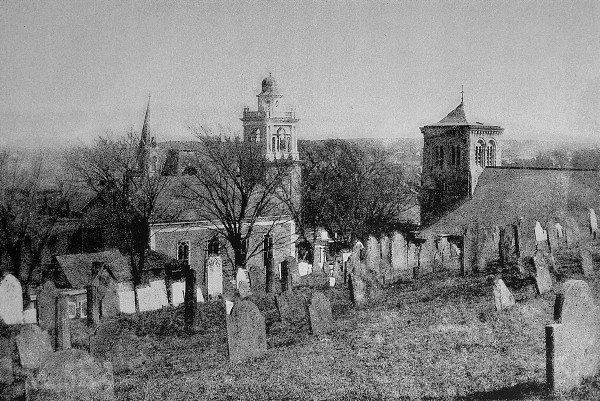 Plymouth, from the Graveyard on the Hill There is a collection
at
Plymouth, in Pilgrim Hall, which is rich in mementoes of the very early
days.
There is the great circular gate-legged table, almost six feet across,
rigid
and strong and plain and underbraced, which was the council table when
Winslow
was governor. There is the very chair of the first governor, John
Carver, who
died in the first winter, a plain, massive turned chair which seems as
severe
as the popular idea of the most severe belongings. There is the
veritable sword
of Miles Standish, a Damascus blade. There is a dear little wicker
cradle, a
Dutch cradle, in shape like a basket with a hood to keep off the draft,
carried
with the Mayflower for little Peregrine White, named from the peregrinations
of his
parents, and the first white child born on the soil of New England.
Little
Oceanus Hopkins might have taken away the title of precedence from
Peregrine
had Oceanus not been born, as his name implies, before the Mayflower
reached the promised land. Many other things, little and
big, are preserved. There are early spoons and early needle work. There
is some
superb ecclesiastical silver designed for the early churches and
preserved with
record of where it was made. Standing anywhere
along the
shore at Plymouth, or on the hill, one cannot but notice a monument
that rises,
lofty and striking, far out beyond the leftward stretch of the bay; and
this is
the monument to Miles Standish. Although he was not a Puritan, and not
really a
Pilgrim, for he was a soldier of fortune, who had been fighting for the
Dutch
against the Spanish and then as a soldier of Queen Elizabeth, a
Dalgetty, who
was out of employment as a fighter when the Pilgrims sailed and was
engaged as
an excellent man to meet the savages, he has been given a far more
prominent
monument than has any other of those early men; and so nobly did he
develop, at
Plymouth, in bravery, in self-sacrifice, in the finest qualities of
manhood
that he well deserves prominent remembrance. The old chronicle has it
Captain
Standish and Elder Brewster, more than any others, "to their great
comendations be it spoken, spared no pains night nor day, but with
abundance of
toyle and hazard of their own strength helped others in sickness and
death, a
rare example worthy to be remembred"; and in addition Standish was a
man
of absolute bravery. The monument is
reached by a
roundabout way, of several miles, from Plymouth. The figure of Standish
tops
the structure; and by some unexplainable freak he is made to face away
from the
town that honored him and for which he did so much. The monument is on
the
summit of a considerable hill and there is in view a long, long line of
shore;
and looking toward the sea one may see, as I have seen, the water
dotted with
the mackerel fleet, setting homeward; and a thin gray vagueness on the
horizon
marks the distant line of Cape Cod. Looking landward, one sees endless
miles of
bluish pine woods through which the white spire of a meeting house
rises with
effective unexpectedness, and looking across the bay toward Plymouth
there is a
wonderful effect as if the city is still a place crowded against the
waterside
at the edge of a vast wilderness. A rather small old
house, a story and a half high,
sleeping under the shelter of this hill, a house with a sort of
distinction in
spite of its smallness, and with a great lilac bush at its front, a
house that
must always have been rather solitary, is the house in which some have
believed
that Standish lived for the last years of his life; but in reality it
would
seem that his own house, long vanished, stood close beside where this
house
stands and that this was put up by an immediate descendant. That Standish was a
short
man, sinewy and robust, and that his little library actually contained,
just as
the poet has described it, the Commentaries of Caesar, are among the
rather
slender facts known in regard to his personality, but an inventory of
the
property left by him
at his death itemizes that in his possession, among other
things, were 4
bedsteads and 1 settle bed, 5 feather beds with blankets and sheets, 1
tablecloth and 4 napkins, 4 iron pots, 3 brass kettles and one dozen
wooden
plates-with no plates of any better material mentioned. There were
muskets and
sword; and, as if in defiance of the spinning-wheel of Priscilla which,
after
all, was more a matter of concern to Alden than to him, there were two
spinning
wheels. Horses and cattle must have increased in the colony since the
earliest days
for he left at his death 2 mares, 2 colts and 1 young horse, 4 oxen, 6
cows, 3
heifers, 1 calf, 8 sheep, 2 rams, 1 wether and 14 swine. At quite a distance,
naturally, from this spot, is where John Alden and Priscilla lived,
but, like
this, within the limits of Duxbury. It is a pleasant drive across
country, from
one place to the other, through a region of blue inlets setting in from
the
blue, blue sea, with much of pine woods, and of the little bushes that
bear
beach plums. The house built here
by John
Alden has disappeared, but the present building stands on its site and,
it is
believed, was built by a grandson. But it looks old enough to have been
built
toward the end of John Alden's long life, and it is possible, though
not
probable, that he actually lived in it. Often, it is impossible to fix
the
precise date of construction of an ancient house, as the only definite
records
are likely to be of land alone and not the buildings. This Alden house
stands on
the top of a low mound; it is shingled-sided; and the present occupant
confided
to me that if he did not keep a close eye on visitors every silvery old
shingle
would soon be stripped off as a souvenir! The entire front of the house
is
massed in a luxurious greenery of grapevines, entwined with scarlet
dotted
trumpet-vines; a peach tree is espaliered on the side and a great
trumpet-vine
has clambered upon the roof; and nearby is a field that, when I saw it,
was a
great yellow splendor of golden-rod, bordered empurplingly with asters. How strange it must
all have
seemed to Alden! He never intended to be a Pilgrim. He was a cooper,
hired at
Southampton when the Mayflower
touched there, and it was expected that he would
return in the ship from America. But he was "a hopfull young man,"
and the leaders quietly hoped that he would remain – and Priscilla did
the
rest. It is so pleasant to think of the poetic wedding journey with the
bride
mounted on the white bull, that it is needlessly iconoclastic to point
out that
the very first cattle, three heifers and a bull, did not reach Plymouth
until
1624. It is sometimes
forgotten
that the first landing of the Pilgrims in the New World was not made at
Plymouth but at the inside of the tip of Cape Cod; where, not long
after their
visit, the settlement of Provincetown was made. Cape Cod, at the time
of
their visit, was a desolate region, but had earlier been visited by
others.
First, the Norsemen; afterwards, Bartholomew Gosnold, who gave the cape
its
fishy name; even the picturesque Champlain made a brief stop here, as
did the
equally picturesque Captain John Smith, who described the fields of
corn and
"salvage gardens." So many people were here before the Pilgrims as to
give almost an effect of crowded life! But it was lonely enough when
the
Pilgrims actually came, though they did finally see some Indians, who,
although
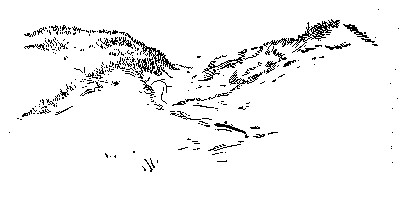
they ran off, did so, "whistling to their dogge"! Sand is the principal
product of Provincetown. The whole Cape is shifting sand, that changes
with
every wind, and that makes hills into valleys and valleys into hills,
and that
threatens to destroy the little town itself. Many have been the
wrecks on
Cape Cod; and most interesting was that of the Somerset; on the outer
edge of
the narrow cape. This was the big man-of-war, of from forty to sixty
cannon and
a crew of almost five hundred men, under whose lee, when it was in
Boston
harbor, Paul Revere was rowed when starting with the message to
Lexington. It
aided in the bombardment of the Americans on the day of Bunker Hill,
and
afterwards won a cruel reputation for its seizures of American
shipping. In a
great storm in 1778 it was driven ashore here, and the tradition of the
Cape
has it that, most of the men being absent on military duty, the women
took an
active share in holding captive the men from the wreck and in getting
the guns
to land to save them for the use of the American army. The wreck was
completely
dismantled; gradually it was covered with sand and the very place was
forgotten. Years afterwards, a storm uncovered it, and then the sands
covered
it again, and many years later it was again uncovered and fully
identified by
details of its structure from official records furnished by the
Admiralty in
London. Before the sands covered it again I saw it myself, with its
grim and
blackened vertebrae; and it was fascinating to find such a memento of
the
Revolution lying on this lonely outward shore, so near little
Provincetown. Growing wild in
hollows
among the dunes, with scrub pines and oaks, is the marvelously fragrant
bayberry from which the early settlers made their candles and from
which a
later generation made bay rum. And in these hollows wild roses grow in
luxurious-ness, and innumerable red beach-plums. Provincetown is
distinctly a
sailor's town; there are sailors here who have been all over the world;
but it
will be noticed that "barges" are not boats but wagons! A figurehead
from some old ship leans forward from a post; fish-shaped weather-vanes
turn
with the varying winds; you naturally see a seamen's bank; a profusion
of
binoculars pervades the place; you may even catch sight of the backbone
of a
whale in a captain's yard; wreckage is stacked for fire-wood; and in
some of
the old pilastered or porticoed houses there are preserved the original
logs of
whaling trips, showing whales, pictured in ink that long since
yellowed, to
mark the days of fortunate catches. Every sailor seems to
have
the title of captain; most, in fact, have a right to the title, for
each has
been in charge of at least a fishing-boat; and these captains are men
of
individual interest. One is a gatherer of ambergris (romantic name!),
and he
also sells watch-makers' oil, which he poetically procures from
porpoise heads.
Another of the captains, a gentle soul, is a story-teller who,
unfortunately,
has so out-told himself that the same narratives are given over and
over.
"Have I ever told this before?" I heard him interrupt himself to ask
one day; and when the goaded interlocutor, another captain, replied
that he
had, the first captain responded, gently tolerant, "Oh, well, I'll tell
it
again then." Another captain, confiding to me that he had been married
fifty-five years, gravely added, as he pointed to his old dog lying
beside him,
"And that is all I've got left to show for it." Another told of a
life-time sea-friend who had recently died at the age of ninety-two. "Did he leave any
family?" "No," said the
captain. "His father and mother were both dead." When, speaking with
another, I commented on the roses growing in profuse loveliness in the
gardens
of the town, in spite of the difficulties of sand, he replied, from
some
pessimistic association of ideas: "Yes, but if there is ever a year
when
the rose-bugs don't get after the roses the dogfish are sure to get
after the
mackerel." But optimism is the prevailing note, as with a captain, an
ancient, earnest citizen, who exclaimed to me: "Why, the man who would
complain of this Cape Cod climate would complain if he were going to be
hung!" Another still tells the story of a sea-serpent that he saw many
years ago; and I was told that when his townsmen ridiculed him and
frankly told
him, from knowledge of his idiosyncrasies, that he must have been
drinking, he
went before a notary and made affidavit that "I was not drinking on the
day I saw the sea-serpent" – and he still fails to see why everybody
laughs. Another, speaking of the general truthfulness of the place,
deemed it
measurably referable to ancient strictness of law, giving as an example
that in
the good old formative days "a captain was fined five dollars for lying
about a whale." The Portuguese,
always
locally referred to as "Portygees," have come in so freely from the
Azores and the Cape de Verde Islands, that they give a markedly alien
touch,
with their distinctive language, religion, dress and costumes. The town
is permeated
by them. They are active rivals, on the sea, of the descendants of the
early
Americans, and I remember that a sailing race, open to all, was won by
a boat
whose captain and crew were all Portuguese; but none the less did
Provincetown
royally welcome the victors, and deck its streets with brooms and
buckets. A
still further alien touch is given by a lofty monument, set up a few
years ago
as a memorial to the landing here of the Pilgrims, and which, from some
odd
reason, is of distinctly Italian style. A town-crier still
busies
himself with the crier's ancient duties, and the townsfolk claim that
the
custom has kept on undisturbed from early times. The talk and
interests of
Provincetown are of cod and mackerel and haddock, and when a boat comes
in with
a catch the event is eagerly discussed along the entire three miles of
far-flung water front. The town is principally one long and sinuous and
attenuated street, but there are also little lanes twisting away from
it. A few
old-time houses still remain with silver-gray shingles on their roofs
and
sides. Everywhere is an aspect of scrupulous neatness, as if on
shipboard, and
the houses in general have a snuggled and tucked-in look as if triced
down for
a storm. Many are shaded by big trees; and it is curious that there are
so many
great elms and enormous swamp-willows in spite of the discouraging
environment. When the tide sweeps
out,
great flats of green and yellow and gray stretch off in front of the
town, and
amphibious horses, half submerged, draw far out, in the track of the
receding
tides, little carts, likewise half-submerged, into which to unload such
fishing
boats as return at a time when they cannot reach the piers. But sand is the
prevailing feature.
Surely, round about Provincetown is where the Walrus and the Carpenter
walked
together. You remember the lines?
 |
 Click the book image to turn to the next Chapter.